
Extension garage door springs are the long, stretched coils that help lift many older or budget-friendly sectional garage doors. When the door works, they are easy to ignore. When one breaks, the door can slam down, hang crooked, or become too heavy for the opener. I have seen homeowners treat a failed spring like a simple hardware-store fix, and that is where fingers, windshields, and opener gears get damaged. I have screwed this up so you do not have to: understand the system first, then decide whether the job belongs on your workbench or in a professional's truck.
How extension springs work
An extension spring sits alongside the horizontal track, usually above the top section of the door. It stretches as the door closes and contracts as the door opens. Cables running through pulleys transfer that spring force to the bottom corners of the door. A properly balanced pair shares the load, while safety cables run through the springs to limit flying parts if a coil breaks.
Extension garage door springs are different from torsion springs, which mount on a steel shaft above the door and twist instead of stretching. Extension systems are common on older homes, detached garages, and doors with lower headroom. Torsion systems are often smoother and more controlled, but replacing one type with the other is not a casual upgrade. Track layout, door weight, clearance, drums, cables, and hardware all have to match.
The spring is not selected by measuring its relaxed length alone. A technician also considers wire diameter, inside diameter, coil length, door weight, and the position of the pulley system. A nearly identical-looking replacement can leave the door too heavy, too fast, or difficult for the opener to control.

Signs the spring system is failing
The clearest sign is a door that will not stay open halfway. Disconnect the opener only if the release handle can be reached safely and the door is fully closed. Never pull the release while the door is raised with a broken spring. If the door is closed, a trained adult can sometimes lift it manually a few inches to assess unusual weight, but do not force it.
Look for a visible gap in a coil, a stretched spring that no longer retracts, a loose cable, or a pulley rubbing against the track. Loud popping, uneven movement, and a door that rises several inches before stopping also deserve attention. If one side lifts before the other, the cables may be misrouted or one spring may be carrying more load than the other.
A broken extension spring does not always mean the door itself is ruined. Hinges, rollers, tracks, and cables may still be serviceable. However, a broken safety cable, bent track, or damaged top roller bracket turns the situation into more than a spring replacement. Keep children, pets, and vehicles clear until the door is secured.
Repair or replacement: what actually makes sense
With extension garage door springs, replacing both springs is usually more sensible than replacing only the broken one. Springs age together, and installing one new spring beside one tired spring can produce an uneven door. The parts themselves may cost roughly $30 to $100 for a matched pair, depending on size and quality. A professional service call commonly brings the total into the $200 to $450 range, with access, parts, and local labor affecting the final price.
If the pulleys are noisy, cracked, or worn flat, replace them during the same visit. New lift cables are also reasonable when they show fraying, rust, or kinks. Reusing damaged accessories to save $20 can create a second service call and leave the door unsafe. Lubricating a squealing pulley will not repair a seized bearing or a cable that is about to fail.
A complete conversion from extension garage door springs to torsion hardware can cost several hundred dollars more. It may be worthwhile when the existing tracks are worn, the door is heavy, or the ceiling layout supports a cleaner torsion setup. It is not automatically better for every garage, especially where low headroom or unusual framing limits the available hardware.
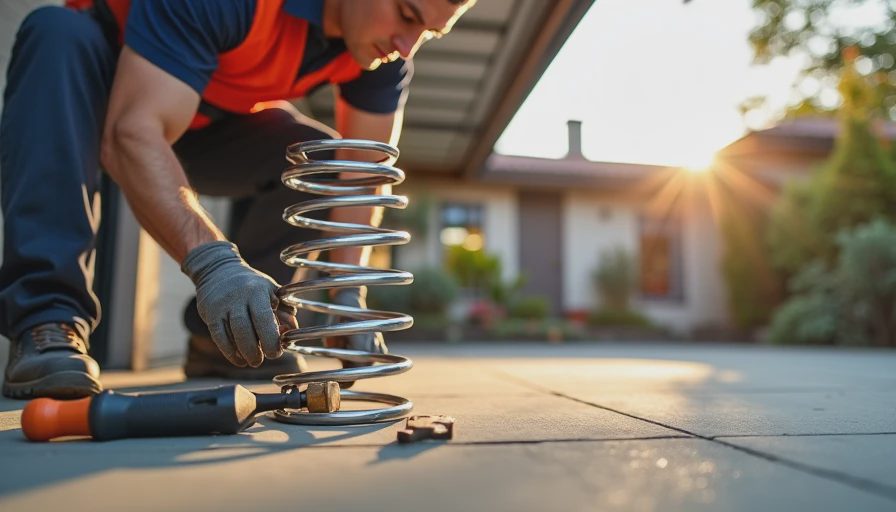
Why this is a poor beginner repair
The danger is stored energy. Even when a spring looks relaxed, the cables and pulleys can move suddenly when the door shifts. A loose cable can whip, a pulley can spin, and a door weighing several hundred pounds can drop when the opener is disconnected. The common DIY mistake is removing a spring before installing or verifying the safety cable. Another is changing one side without confirming that the pair and pulley ratio are correct.
I am comfortable rebuilding a workbench, replacing rollers, and adjusting minor hardware. I still do not recommend that a handy homeowner replace extension garage door springs without proper training and the correct restraint equipment. The safe boundary is simple: clean the tracks, inspect rollers from a distance, test the remote batteries, and call a qualified garage door technician for spring, cable, or pulley work.
Ask the technician whether the quote includes two matched springs, safety cables, pulley inspection, balance testing, and removal of the old parts. A written estimate should also state whether tax, trip charges, and evening or weekend premiums are included. If someone proposes a spring based only on the door's color or a quick visual guess, get another opinion.
Making the new setup last
Once extension garage door springs are installed, keep the door and surrounding hardware clean and protected from avoidable abuse. Do not store ladders, lumber, or bins where they can strike the tracks. Watch the bottom corners during operation; a cable that begins to sag or jump off its pulley needs prompt attention.
Use a garage-door lubricant on hinges, rollers, and bearing points according to the hardware manufacturer's guidance. Avoid coating the tracks with heavy grease. Grease collects grit and can make rollers drag. Also check that the photo-eye sensors remain aligned and that the opener reverses when the door meets a suitable test object. This does not replace a spring inspection, but it catches other common safety problems.
Cold weather can expose marginal hardware. In an attached garage, temperature swings, road salt, and moisture from wet vehicles can accelerate rust on cables and brackets. Once or twice a year, spend ten minutes observing a full open-and-close cycle. Listen for scraping, watch for shaking, and stop the door if one side moves differently from the other.
Choosing the right service call
Search for a local company that clearly handles residential garage doors and carries matched parts for your door size. Established names such as Clopay, Wayne Dalton, and Amarr publish door information, but the spring still has to be matched to the installed system rather than chosen by brand alone. A reputable technician should explain the repair in plain language, show the failed component, and test the balance before leaving.
The best time to compare prices is before the door is stuck, not after the car is trapped inside. Take a photo of the spring area from a safe distance, note whether the door is one-car or two-car width, and record any unusual noise. Do not operate the opener repeatedly to force a damaged door. That can strip gears or bend the top section.
Extension garage door springs are practical hardware, but they are not ordinary household springs. Know the warning signs, replace worn supporting parts, and treat stored energy with respect. The smart repair is the one that leaves the door balanced, quiet, and safe for the next full season. Back to the bench.