A jobsmart 4-drawer steel tool box looks like the kind of storage that can bring order to a crowded home garage without eating the whole budget. I have spent enough time rebuilding garages to know the difference between useful storage and a thin metal box that becomes annoying after one season. This unit sits in the useful middle ground: compact, affordable, and capable of handling the hand tools most homeowners actually use.
It is not a professional mechanic's full rolling cabinet, and pretending otherwise would be bad advice. The drawers are sized for sockets, pliers, screwdrivers, measuring tools, and small hardware rather than large power tools. For a homeowner setting up a first workbench, however, the jobsmart 4-drawer steel tool box can make a messy bench functional in an afternoon.
What you get for the money
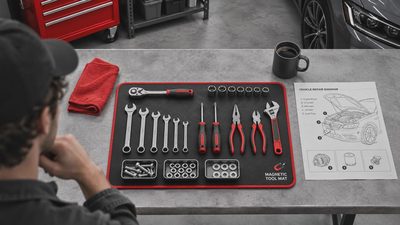
The appeal starts with the basic layout. Four drawers give you separate zones instead of one deep cavity where everything lands in a pile. I would use the top drawer for screwdrivers, hex keys, and utility knives; the second for pliers and cutters; the third for ratchets and sockets; and the bottom drawer for drill bits, fasteners, and less frequently used hand tools.
That arrangement matters more than people expect. When a toolbox has only one or two drawers, you end up stacking tools by size rather than by job. The first drawer becomes a junk drawer within a month. A four-drawer layout gives you enough separation to build habits without requiring a 56-inch cabinet.
The steel construction also gives the box a more substantial feel than molded plastic organizers. It will not shrug off a dropped engine block, but it is suitable for normal homeowner work: lawn equipment repairs, bicycle maintenance, furniture fixes, electrical box projects, and routine vehicle service. Expect a budget finish, not the thick powder coating found on premium boxes from Craftsman, Husky, or Milwaukee.

Drawer capacity and everyday use
The most important question with a jobsmart 4-drawer steel tool box is not whether four drawers sound good. It is whether those drawers open smoothly after you put tools inside. Light-duty slides are usually the limiting factor on affordable tool storage. They handle organized hand tools well, but they are not designed for a drawer packed with heavy sockets and steel wrenches.
I would keep the heaviest items low and spread the load across the box. A full socket set can become surprisingly heavy, especially if it includes deep sockets, impact adapters, and a large ratchet. Put that collection in the bottom drawer and use the upper drawers for lighter tools. You will reduce strain on the slides and make the box less likely to tip when a drawer is open.
Drawer liners are another small upgrade that pays off. A roll of non-slip toolbox liner commonly costs around $10 to $20 and can be cut with a utility knife. It prevents screwdrivers from rolling, keeps sockets from rattling, and protects the painted steel from repeated scraping. Do not use loose cardboard; it absorbs oil and eventually turns into a dirty, curled mess.
Where the box belongs in a garage
This box works best on a solid bench or a sturdy shelf between waist and chest height. I have seen homeowners place small toolboxes on the floor because the garage bench was already crowded. That sounds harmless until you kneel down in winter, open the wrong drawer, and discover that the tool you need is buried behind three containers of fasteners.
A 24- to 30-inch-deep workbench gives the jobsmart 4-drawer steel tool box a sensible home while leaving room for a vise, battery charger, or small parts tray. Keep the rear of the box several inches from the wall so drawers can open fully. If the bench is on casters, lock them before opening a loaded drawer. A moving bench turns a quick repair into a dropped-tool problem.
Do not treat the box as outdoor storage. Even galvanized-looking or painted steel will eventually show rust if it sits beside a garage door where rain blows in. In an attached garage, keep it off a damp concrete floor and wipe oily tools before storage. A cheap silicone mat under the box can protect both the bench and the bottom edge.

How I would organize it on day one
Start with an empty bench and sort tools into four working groups. Put frequently used driving tools, such as Phillips and flat-head screwdrivers, nut drivers, and a small bit set, in the top drawer. The next drawer should hold pliers, adjustable wrenches, wire strippers, and cutters. Keep sockets, ratchets, extensions, and adapters together so a repair does not require opening every drawer.
Use the lowest drawer for heavier or less frequently used items. A tape measure, combination square, inspection mirror, small level, and spare blades can share the upper space if they do not crowd the slide. Small bins inside a drawer are worth the few dollars they cost. I use shallow bins for metric hardware, standard hardware, washers, and electrical connectors.
After two weeks, reorganize based on what you actually reach for. Garage storage should follow your work, not a catalog picture. If every vehicle repair starts with the third drawer, move that drawer's contents upward. The best layout is the one that saves steps when your hands are greasy and the garage door is already open.
What this box does not replace
A jobsmart 4-drawer steel tool box is not a substitute for a rolling cabinet, a locking jobsite chest, or wall-mounted storage. It cannot hold a large circular saw, angle grinder, heavy clamps, or multiple power-tool batteries comfortably. Those items belong on a shelf, pegboard, French cleat system, or dedicated power-tool rack.
It also is not the right answer if you regularly repair trucks, farm equipment, or commercial machinery. A professional mechanic may need deeper drawers, stronger full-extension slides, a keyed lock, and a work surface that can tolerate hard use. Spending $40 to $100 more on a sturdier cabinet can be sensible when the box will be opened dozens of times each day.
For ordinary household work, the limitation is easier to manage. Keep the hand tools in the box and store bulky tools nearby. That division prevents you from overloading drawers and lets the small cabinet do the job it was designed for.
My buying and setup checklist
Before ordering a jobsmart 4-drawer steel tool box, measure the bench, not just the empty space in your head. Check width, depth, and height, then allow clearance for drawer pulls and your fingers. Confirm that the bench can support the box plus its contents; a loaded metal box can weigh considerably more than the packaging suggests.
Inspect the box when it arrives. Look for bent drawer fronts, chipped paint, missing hardware, and slides that bind near the end of their travel. Do not force a sticky drawer. Remove the drawer if the design allows it, check for packaging material, and make sure the slides are seated correctly. A few minutes of setup can prevent months of frustration.
I would also add labels only after the layout settles. Painter's tape works for the first month, while small printed labels look cleaner once you know where everything belongs. Keep a small magnetic parts dish on top, but do not let the top become a permanent pile of receipts, drill bits, and loose screws.
Final garage verdict
The jobsmart 4-drawer steel tool box makes sense for a homeowner who needs organized hand-tool storage without committing to a large rolling cabinet. Its strengths are straightforward: four useful drawers, a compact footprint, steel construction, and a price that leaves room in the budget for liners, bins, and a better task light.
Its weaknesses are just as clear. Do not overload the drawers, expect premium slide action, or use it as outdoor or professional shop storage. I have screwed this up so you do not have to: buy the box for the tools it can hold, place it on a stable bench, and organize it before the clutter returns.
If your garage is still a collection of loose tools and half-open cases, this is a practical first step. It will not finish the whole workshop, but it can give the bench a working center and make the next repair less aggravating. Back to the bench.