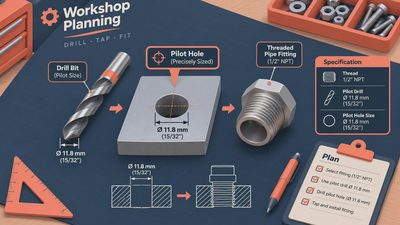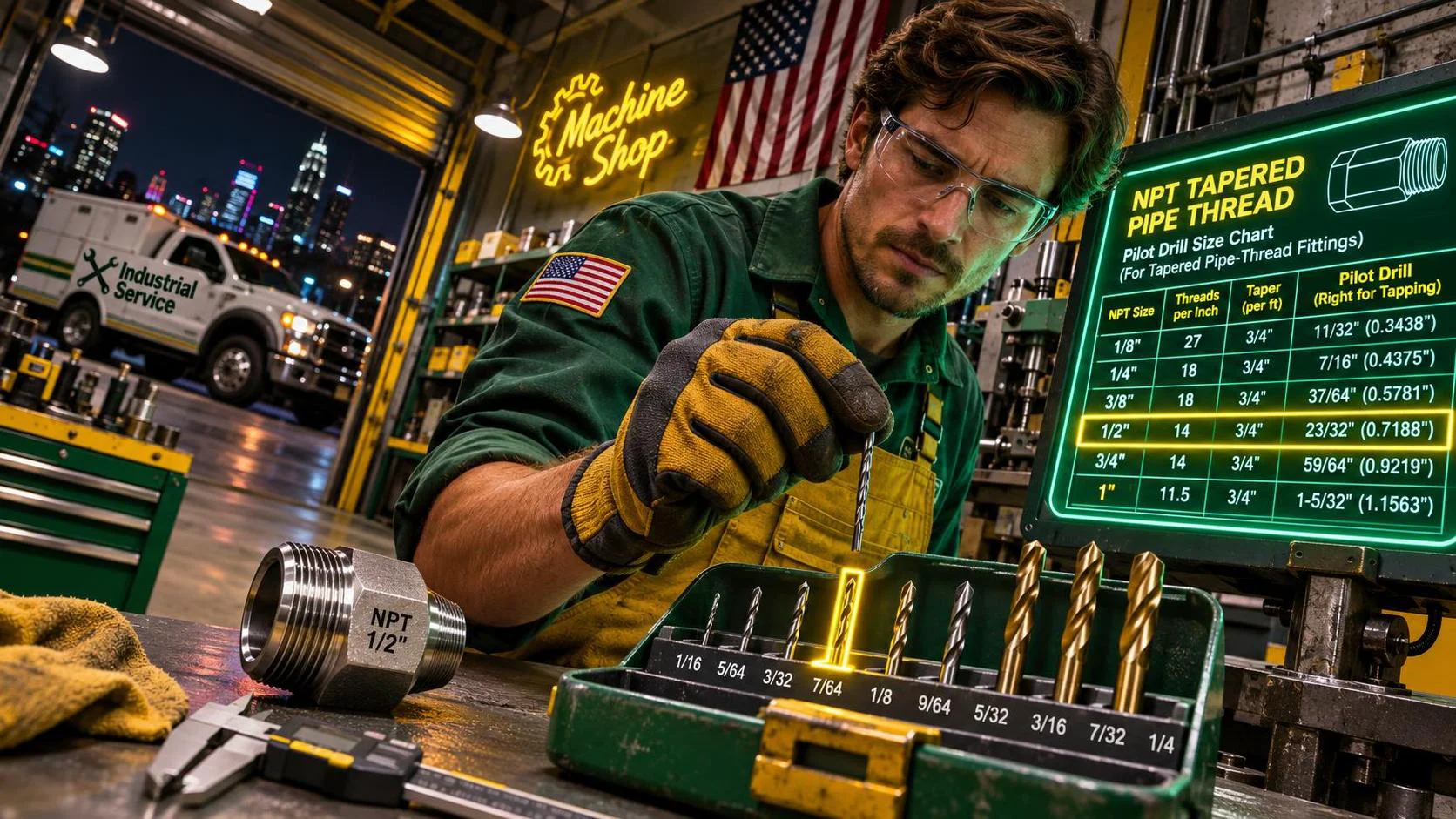
If you are drilling a hole for a small air line, pressure gauge, grease fitting, or plumbing adapter, the 1/8 npt drill size you usually want is 11/32 inch. That is the common tap-drill size for a 1/8-27 NPT thread. I have used that combination in steel brackets, aluminum manifolds, and shop-air projects more times than I can count. I've also screwed this up so you don't have to: drilling too deep, using a dull bit, or treating a tapered pipe thread like an ordinary straight machine thread.
NPT stands for National Pipe Taper. The thread has 27 threads per inch, and both the external fitting and internal hole are tapered. That taper is what helps the fitting tighten and seal. The drill makes the starting hole; the NPT tap cuts the actual thread profile. Do not confuse this operation with drilling a simple clearance hole for a fitting.
The correct 1/8 npt drill size and what it means
For a standard 1/8-27 NPT tap, use an 11/32-inch drill bit for the pilot hole. The bit measures about 0.3438 inch across. A standard 1/8 NPT male fitting has an outside thread diameter around 0.405 inch, so the finished threaded hole is not supposed to begin at the fitting's full outside diameter. The tap removes material and forms the tapered internal thread.
The 11/32-inch recommendation is a practical shop standard, not a promise that every tap manufacturer prints the same chart. Some charts list a nearby decimal or letter drill for a particular material, tap style, or depth. If your tap came with instructions, those instructions take priority. For ordinary hand tapping in mild steel, cast aluminum, brass, and similar materials, 11/32 inch is the number I reach for first.
A smaller drill can make the tap work unnecessarily hard and increases the chance of breaking it. A larger drill leaves shallow threads that can leak or strip. Pipe threads need enough full engagement to seal, but they do not need to be driven all the way through the workpiece.
How deep should you drill and tap?
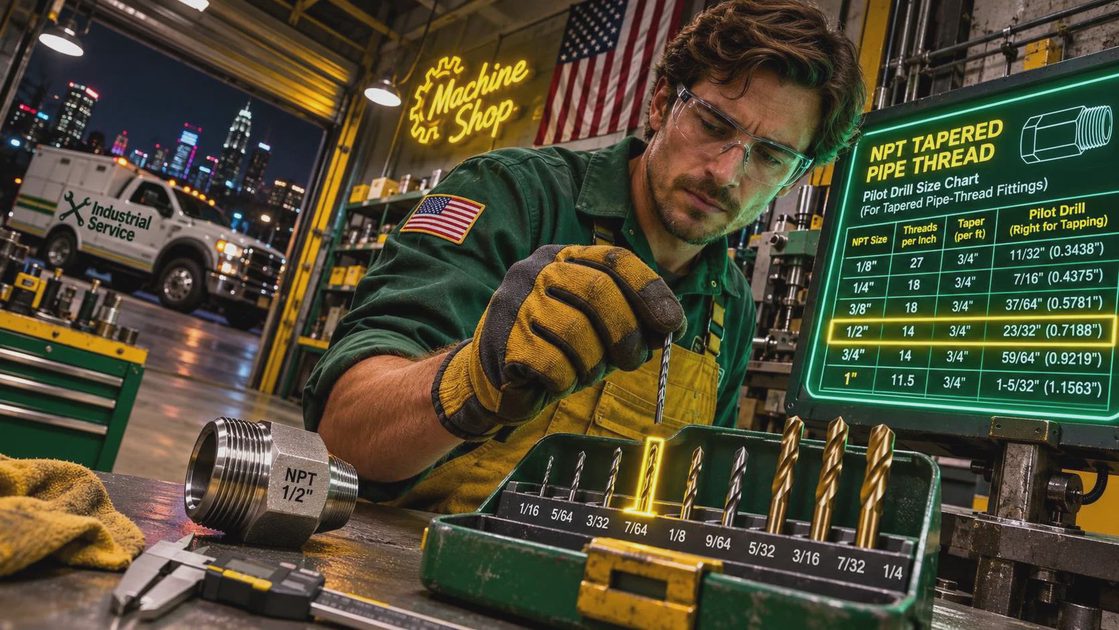
The 1/8 npt drill size controls hole diameter, but depth controls whether the fitting seats correctly. First measure the threaded portion of the fitting and decide how much engagement you need. For many small fittings, roughly 5/16 to 3/8 inch of useful thread engagement is enough, but the exact depth depends on the fitting, wall thickness, pressure, and material.
Drill deeper than the intended tapped depth so the tap has room for its point and chips. In a blind hole, an extra 1/8 to 1/4 inch can make the difference between a clean bottom and a jammed tap. Mark the bit with tape or use a depth stop. I prefer a drill press for square holes, but a hand drill works when the surface is flat and I start with a center punch.
Before tapping, break the sharp edge with a countersink or larger drill held lightly by hand. That small chamfer helps the tap start straight and prevents a ragged lip from interfering with the fitting. Do not create a huge countersink; you are only removing the burr.
Tapping steel, aluminum, and brass
The 1/8 npt drill size stays the same in many materials, but cutting technique changes. In mild steel, use a real cutting fluid such as Tap Magic or a suitable sulfurized tapping oil. Run the drill at a moderate speed, keep steady pressure, and back the tap out frequently to break chips. A quarter-turn forward followed by an eighth-turn back is a dependable rhythm for hand tapping.
Aluminum usually cuts easily, but soft chips can pack the flutes. Kerosene-based aluminum cutting fluid or a light tapping lubricant helps prevent galling. Brass often needs less lubricant, though a sharp tap still matters. For cast iron, many machinists tap dry and clear the abrasive chips often. Whatever the material, a dull tap is false economy. Replacing a broken 1/8 NPT tap inside a $20 bracket can consume an entire Saturday.
Use a sharp HSS NPT tap sized for 1/8-27 threads. A tapered pipe tap is designed to start the thread gradually. Do not substitute a straight plug tap and expect the fitting to seal correctly.
A reliable step-by-step method
- Mark the hole location and use a center punch so the bit does not walk.
- Drill a small pilot hole if the material is thick or the location is difficult to reach.
- Drill with the 1/8 npt drill size of 11/32 inch, keeping the bit square to the surface.
- Clear the chips and lightly chamfer the hole entrance.
- Apply cutting fluid to the NPT tap and start it by hand, checking that it remains perpendicular.
- Turn the tap slowly, reversing periodically to break chips rather than forcing the tool.
- Stop before the tap bottoms out, then clean the hole and test the fitting.
- Apply a compatible pipe sealant or PTFE tape to the male fitting and tighten it carefully.
The test fitting should enter several turns by hand and become snug as the taper engages. If it spins deep with almost no resistance, the hole may be oversized or over-tapped. If it stops after only one or two turns, remove it and inspect for chips, an undersized hole, or a damaged thread.
Common mistakes that cause leaks
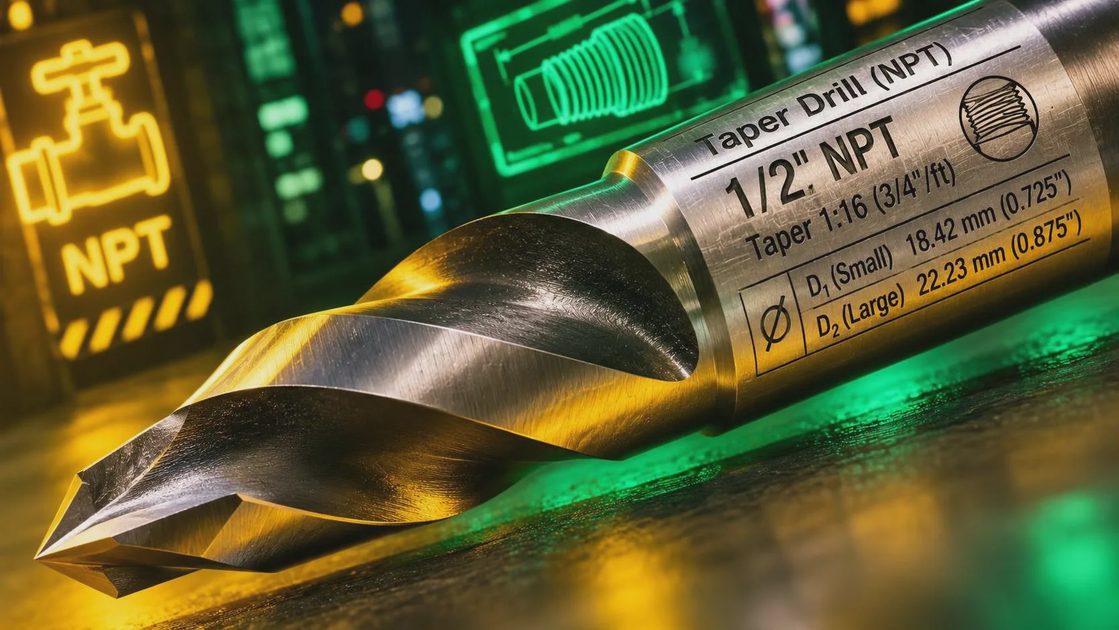
The most common error is using the outside diameter of the fitting as the drill size. That creates a hole too large to hold proper threads. Another mistake is using a 5/16-inch bit because it looks close. It is smaller than the recommended 11/32-inch 1/8 npt drill size and can make tapping especially difficult in steel.
Over-tapping is just as bad. A pipe fitting is not supposed to bottom against the end of a blind hole. It seals on the tapered threads. If you keep turning the tap until the hole looks fully threaded, you can remove the material needed for a tight fit.
Sealant technique matters too. PTFE tape should be wrapped in the direction the fitting tightens, usually clockwise when looking at the male end. Keep tape away from the first thread so loose material does not enter a valve, regulator, or gauge. A liquid pipe sealant is often easier on small fittings and works well where vibration is present, provided it is rated for the fluid and pressure.
Choosing the right setup for your project
For a steel air-manifold block, I would use the 1/8 npt drill size, a sharp HSS tap, a drill press if possible, and cutting oil. For an aluminum fixture, I would clamp the part securely, use lubricant made for aluminum, and clear chips more often. For a thin-wall part, check wall thickness before drilling. A hole can leave too little material around the threads, even when the drill and tap are correct.
If you are adding a pressure gauge to a compressor line, remember that the threaded connection is only one part of the job. Use fittings rated for the system pressure, inspect the hose and valve, and test for leaks with soapy water after assembly. Never rely on thread tape to compensate for a cracked casting or damaged fitting.
Buying a dedicated 11/32-inch bit and a quality 1/8-27 NPT tap is inexpensive insurance. I keep the bit marked in my tap drawer because grabbing a nearby metric bit is an easy mistake when the shop is busy. Verify the 1/8 npt drill size against the tap maker's chart, drill straight, and let the taper do the sealing work.
A clean pipe thread is not complicated; it just rewards patience. Measure twice, make a controlled pilot hole, use the proper lubricant, and stop tapping when the fitting seats firmly. Back to the bench.