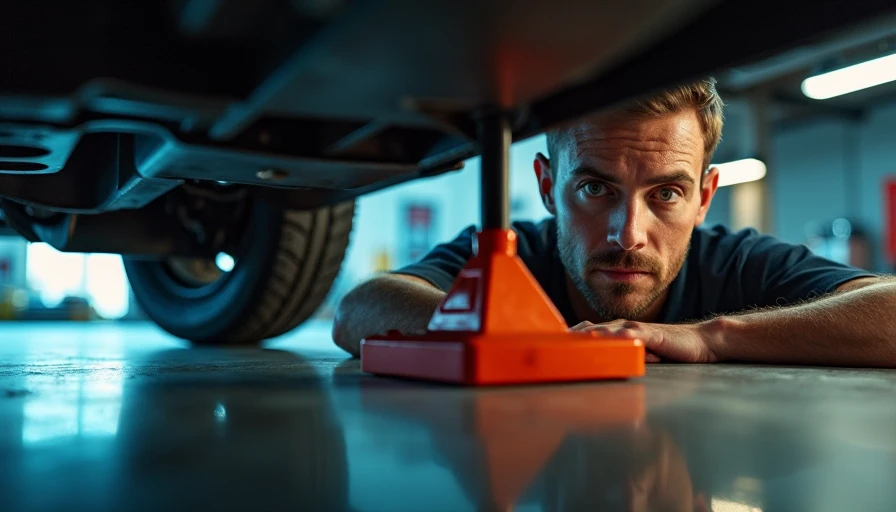
A floor jack extension can solve a real garage problem: your jack has enough lifting capacity, but the saddle does not rise high enough to reach the vehicle's jacking point. That situation is common with trucks, SUVs, lifted vehicles, and cars sitting on taller-than-stock tires. I have run into it plenty of times while working in home garages, and the wrong solution can turn a simple tire change into a dangerous balancing act.
The answer is not always buying the tallest adapter you can find. You need to match the extension to the jack, the vehicle, and the lifting point. A short steel riser may be exactly what you need. A poorly fitting block, improvised pipe, or oversized spacer can let the vehicle shift when the load comes on. I have screwed this up so you do not have to.
What a floor jack extension actually does
A floor jack extension adds height between the jack saddle and the vehicle's approved lifting point. Some models slide into a removable saddle socket. Others sit on top of the existing saddle with a locating pin, rubber pad, or shaped cradle. The design matters because the extension has to stay centered while the jack rolls forward through its lifting arc.
Most home-garage extensions add roughly 2 to 6 inches of working height. That sounds modest, but an extra 3 inches can be the difference between lifting a frame rail correctly and barely catching an edge. A low-profile jack might start around 3 inches high and reach 20 inches or more with an extension. A truck jack may start higher but still need additional reach for an axle or frame point.
Do not confuse added height with added capacity. If your jack is rated for 2 tons, the floor jack extension does not turn it into a 3-ton jack. The jack, adapter, and vehicle must all be used within the lowest rating in the setup. A 5,000-pound vehicle also should not be lifted by a single point unless the service procedure specifically allows it. Lift one end, support it with properly rated jack stands, and never work under a vehicle held only by a hydraulic jack.
How to choose the right extension
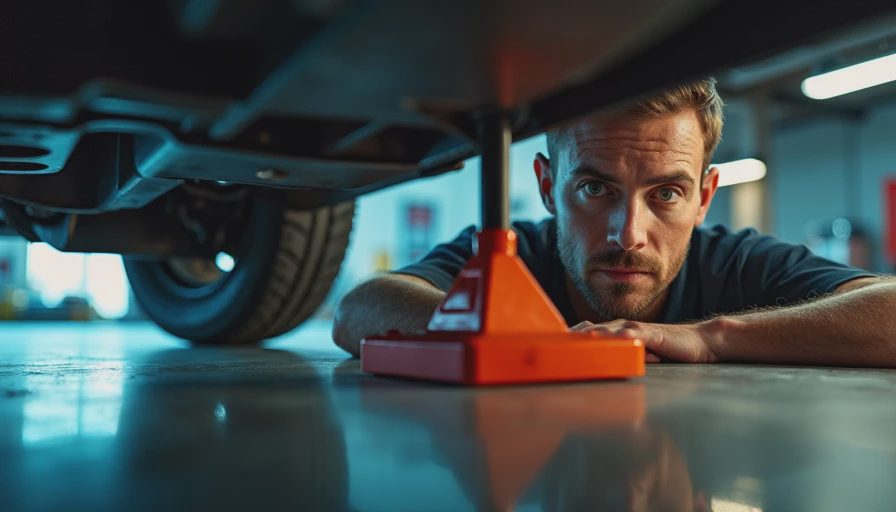
Start with the jack's saddle diameter and mounting method. Measure the saddle, check whether it has a center hole, and look at the manufacturer's parts diagram if one is available. A universal floor jack extension that simply rests on a smooth, shallow saddle deserves extra caution. Under load, a round adapter can walk sideways if its base is not captured.
Next, measure the vehicle before ordering. Park on the same concrete floor where you normally work, measure from the floor to the approved jacking point, then raise the jack until its saddle is near that point. The difference is the minimum useful height. Add a little working margin, but do not buy an extension so tall that the jack reaches its maximum height before the vehicle is high enough for your jack stands.
For a unibody sedan, a flat rubber-topped adapter may fit a reinforced pinch weld or factory lift pad. For a body-on-frame truck, a cup-shaped extension can work better under a frame rail, while a wide axle pad may be more suitable for a differential housing when the service manual permits that location. A 3-inch steel adapter from a reputable tool manufacturer is generally easier to trust than a homemade stack of lumber.
Check the extension's base and top surface. A locating pin, retaining groove, or dedicated saddle socket is valuable. Rubber helps protect painted metal and reduces sliding, but rubber is not a substitute for a stable mechanical fit. Inspect it for splitting, compression damage, and oil contamination before every use.
Matching the adapter to your vehicle
The correct lifting point is more important than the extension itself. Your owner's manual normally identifies reinforced pinch welds, frame sections, axle housings, and other approved points. Do not place an extension beneath thin floor pan metal, suspension arms that are not designed for lifting, fuel lines, plastic rocker trim, or a differential cover that can bend.
A floor jack extension can be particularly useful on a crossover with a low front subframe and a tall rear lift point. It can also help when a truck's side frame sits too far above the travel range of a compact garage jack. In both cases, the extension should contact a strong, centered surface and leave room for the jack stand to support the vehicle afterward.
Watch for side loading. As the jack rises, it rolls on its wheels. If the vehicle is parked against a wall, on a sloped driveway, or with the wheels blocked incorrectly, the jack may not roll as intended. Use a solid, level concrete floor, place the transmission in Park or in gear, set the parking brake, and chock the wheels that remain on the ground. For many vehicles, chocks on both sides of the opposite axle are cheap insurance.
What I would skip in a home garage
I would skip loose wood blocks, stacked hockey pucks, open-ended pipe sections, and any floor jack extension with a visibly undersized base. These solutions sometimes look clever in a video, but a jack is applying a concentrated load to a moving vehicle. Wood can split or crush, rubber can squirm, and a pipe can roll or punch into a small contact area.
I am also wary of very tall adapters used with small aluminum racing jacks. A long extension raises the load higher above the jack's saddle and can increase the effect of a side load. If you need 8 or 10 inches of additional height, a taller-capacity jack or a purpose-built lift solution is usually a better investment than turning a compact jack into a tower.
A floor jack extension should not be used as a permanent support. Once the vehicle reaches the desired height, place jack stands under approved support points, lower the vehicle slowly onto them, and give the body a firm shake from outside the vehicle. If the stands settle, the car shifts, or the adapter starts leaning, lower everything and reset the setup.

A safe setup procedure that takes five minutes
Before lifting, clear the floor and remove loose tools that could catch under the jack wheels. Confirm the jack's capacity, inspect the hydraulic system for leaks, and make sure the extension is seated fully. Position the jack squarely under the lifting point, not at an angle, and keep your hands away from the contact area as the saddle rises.
Pump slowly until the extension touches the vehicle. Stop and verify that it is centered, that the contact surface is strong, and that no brake line, wiring, plastic trim, or exhaust component is being crushed. Raise the vehicle only high enough to place the stands. For a tire change, you usually need the tire barely clear of the floor rather than several extra inches of dramatic suspension droop.
Set the stands at equal, stable locations on the same level floor. Lower the jack until the vehicle's weight rests on them, but leave the jack lightly positioned as a backup only if your workspace and equipment instructions allow it. Never crawl underneath while relying on that hydraulic jack. When the work is complete, raise the vehicle just enough to remove the stands, then lower it gradually and pull the jack away.
Is a floor jack extension worth buying?
For a homeowner who already owns a good jack and needs only 2 to 4 inches of extra reach, a properly fitted floor jack extension is often a sensible $30 to $80 purchase. It can save the cost of replacing a serviceable jack and make routine work on a truck or SUV much easier. Look for published capacity information, a stable mounting feature, a solid steel construction, and a top shape suited to your vehicle's lifting points.
If the adapter is difficult to center, taller than the jack manufacturer recommends, or needed for nearly every job, put the money toward a jack with a better lift range. A quality 3-ton service jack commonly costs more than a basic 2-ton model, but the wider chassis and longer reach can make the entire setup calmer and safer.
Buy the adapter as part of a complete lifting plan, not as a shortcut around the manual. Measure first, support the vehicle with jack stands, and test the fit before committing to a full-height lift. That is how you get more useful height without making your garage setup sketchy. Back to the bench.