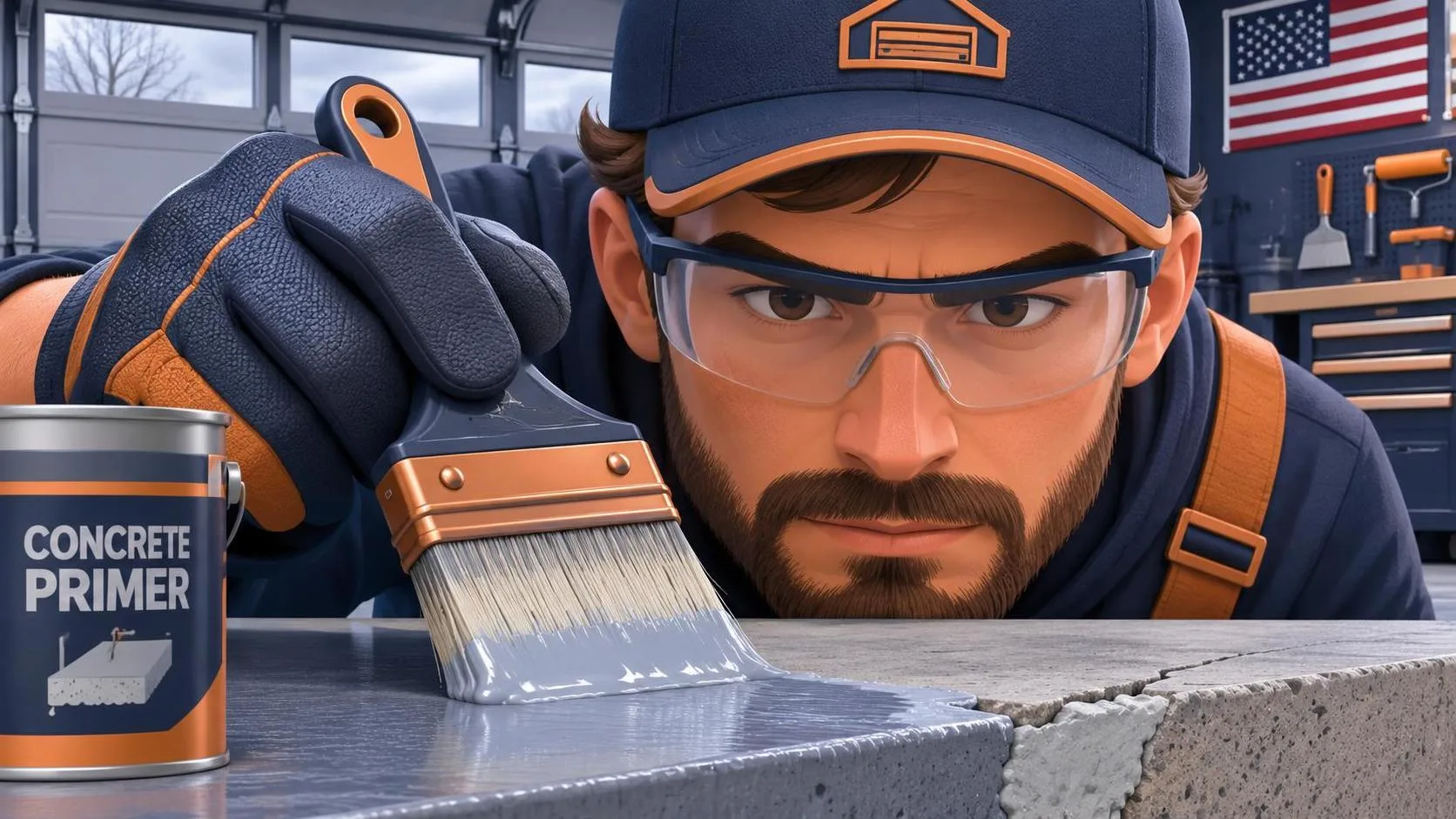
Concrete primer is the bonding layer between a prepared slab and certain floor coatings. For a garage, use the primer specified by the coating manufacturer, not a generic wall primer or whatever is left over from a basement project. Some garage floor systems require one; others are designed to go directly onto properly prepared concrete. The product instructions decide, and the condition of the slab matters just as much.
A primer can help a coating wet out and bond to porous concrete. It cannot fix oil-soaked concrete, active moisture, loose paint, or a smooth floor that never got properly prepared. Put it over those problems and you may end up peeling the whole job off later.
What concrete primer does on a garage floor
Bare concrete is porous, but it is not uniformly porous. A primer helps establish a suitable surface for the coating above it, and some formulations help reduce uneven absorption. Depending on the system, it may also help limit bubbles caused by air moving out of the slab. Those benefits depend on using the right product at the specified coverage rate.
A concrete primer for a garage floor has to be compatible with the finish coat and the conditions underneath. Epoxy, acrylic, and other primer chemistries aren't interchangeable just because their cans say “concrete.” A wall or masonry primer may not be rated for vehicle traffic or suitable under a garage floor epoxy.
Start with the finish coat you want, then read its technical data sheet. Look for the approved primer, surface profile, moisture limits, application temperatures, and recoat window. If the manufacturer says no primer is needed, don't add one on instinct: an unapproved layer can create another place for the system to fail.
Check the slab before buying anything
First, look for existing coatings. If paint flakes when scraped, it needs to come off; primer won't glue a failing layer to the slab. A sound existing coating may need sanding, removal, or a compatibility test, depending on the new system. Follow the coating manufacturer's instructions rather than assuming you can coat over it.
Next, deal with contamination. Oil spots, tire dressing, wax, and old sealers can block adhesion. Degrease stains using a cleaner intended for concrete, rinse as directed, and allow the floor to dry. Deep oil contamination can be stubborn; cleaning the surface once doesn't guarantee it's gone. If a spot keeps showing through or feels greasy, address it before coating.
Sprinkle a little water on several clean areas. If it beads rather than soaking in, a sealer, contamination, or a very dense surface may be present. That's a useful warning, not a complete adhesion test. Don't count on concrete primer to penetrate through an unknown sealer.
Finally, investigate moisture. A damp slab, water entering under the garage door, or recurring white deposits deserves attention before any coating goes down. A taped plastic sheet can reveal obvious condensation, but it is not a substitute for the moisture testing required by the coating manufacturer. If the floor exceeds the system's limit, correct the water source or use a manufacturer-approved moisture-control system before proceeding.
Prepare the surface for concrete primer
For many garage coatings, mechanical grinding is the most dependable way to remove surface contaminants and create the texture the coating needs. The goal is a clean, sound, uniformly prepared surface with the profile specified for the product—not a polished floor and not a gouged-up one. Edges and corners need attention too; a big floor grinder won't reach everywhere.
Use a grinder and dust extraction setup rated for concrete, along with appropriate respiratory and eye protection. Concrete dust can contain respirable crystalline silica, so don't dry-grind with an ordinary shop vacuum and a paper mask. If you can't control the dust or operate the equipment safely, hire a floor-prep contractor.
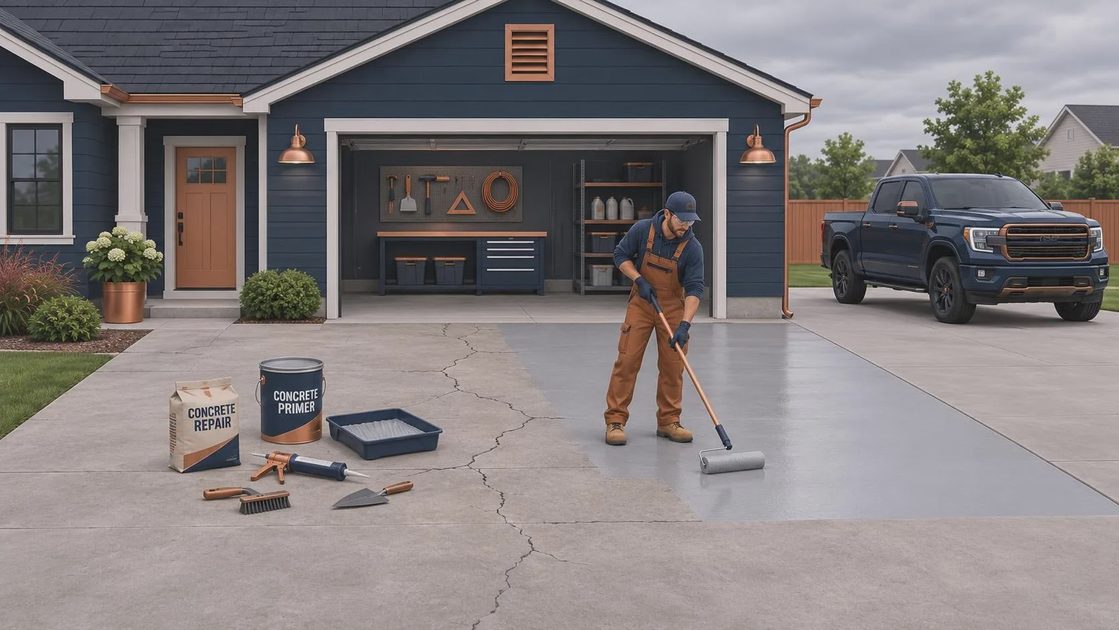
Acid etching is an option for some products, but it doesn't remove oil or failing coatings, and it may not create an adequate profile on every slab. If the coating instructions allow it, follow the acid handling, rinsing, neutralizing, and drying directions exactly. Never mix cleaning chemicals. Mechanical preparation is often the better choice for a previously coated or sealed floor.
Repair cracks and damaged spots with a patch compatible with the coating system. A rigid coating won't stop an actively moving crack from reopening. Leave expansion and control joints functional as directed by the coating manufacturer; don't simply fill every joint flush with an arbitrary patch.
Applying concrete primer without making a mess
Vacuum thoroughly after grinding and repairs. Dust left behind becomes a weak layer between the slab and the coating. Check that the floor is dry and within the product's temperature and humidity limits, including overnight conditions. A cold slab can lag behind the air temperature, so don't judge readiness by the garage thermostat alone.
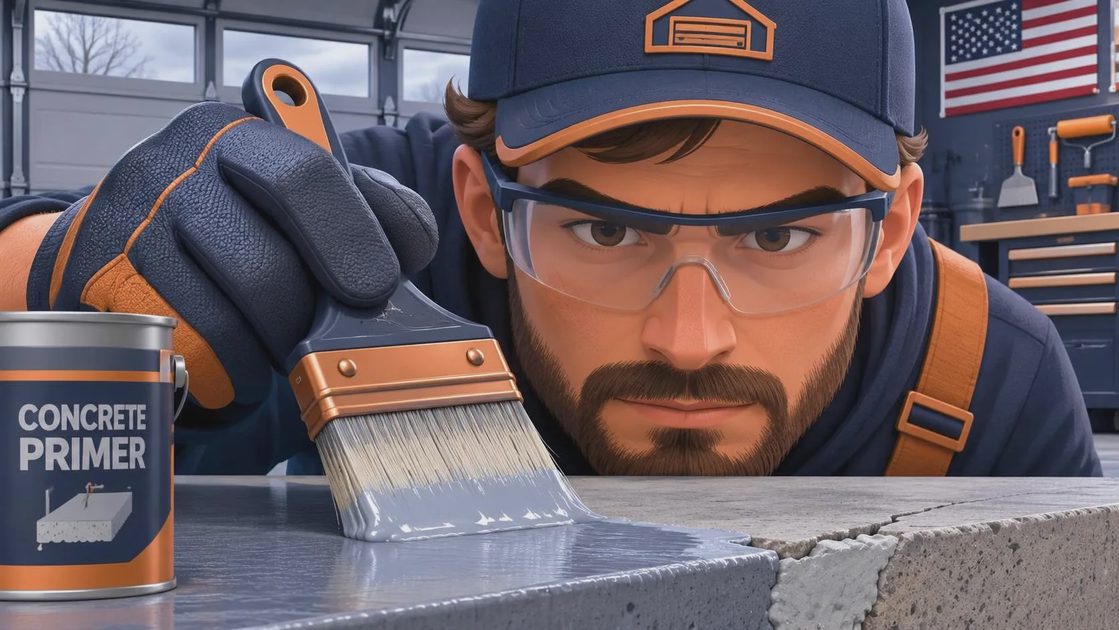
Mix only as directed. Some primers have two components and a limited working time once combined. Use the specified roller or squeegee, spread at the stated coverage rate, and avoid puddles. More material isn't automatically better: a heavy application can interfere with curing or the next coat's bond.
Watch the recoat window. Too soon, and the primer may not be ready; too late, and the surface may require additional preparation. Those times vary with the product and conditions, so use the label rather than a universal overnight rule. Keep the door open or provide ventilation as the product directs, while keeping dust and debris off the wet floor.
When can you drive on the floor?
Wait for the finish coating's vehicle-traffic cure time, not merely the primer's recoat time or the point when the floor feels dry. Those are different milestones. Cool or humid conditions can extend the wait, and putting hot tires on too early can damage a coating that hasn't developed its full properties.
Before moving the car back in, inspect for missed spots, bubbles, and soft areas. Contact the coating manufacturer about defects rather than covering them with another coat and hoping for the best. Good prep is the slow part of this job, but it's a lot faster than scraping a garage floor twice.
Back to the bench.