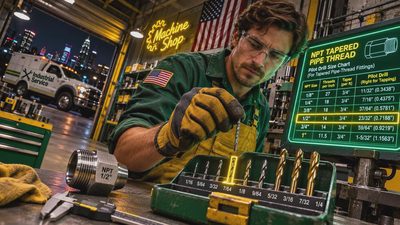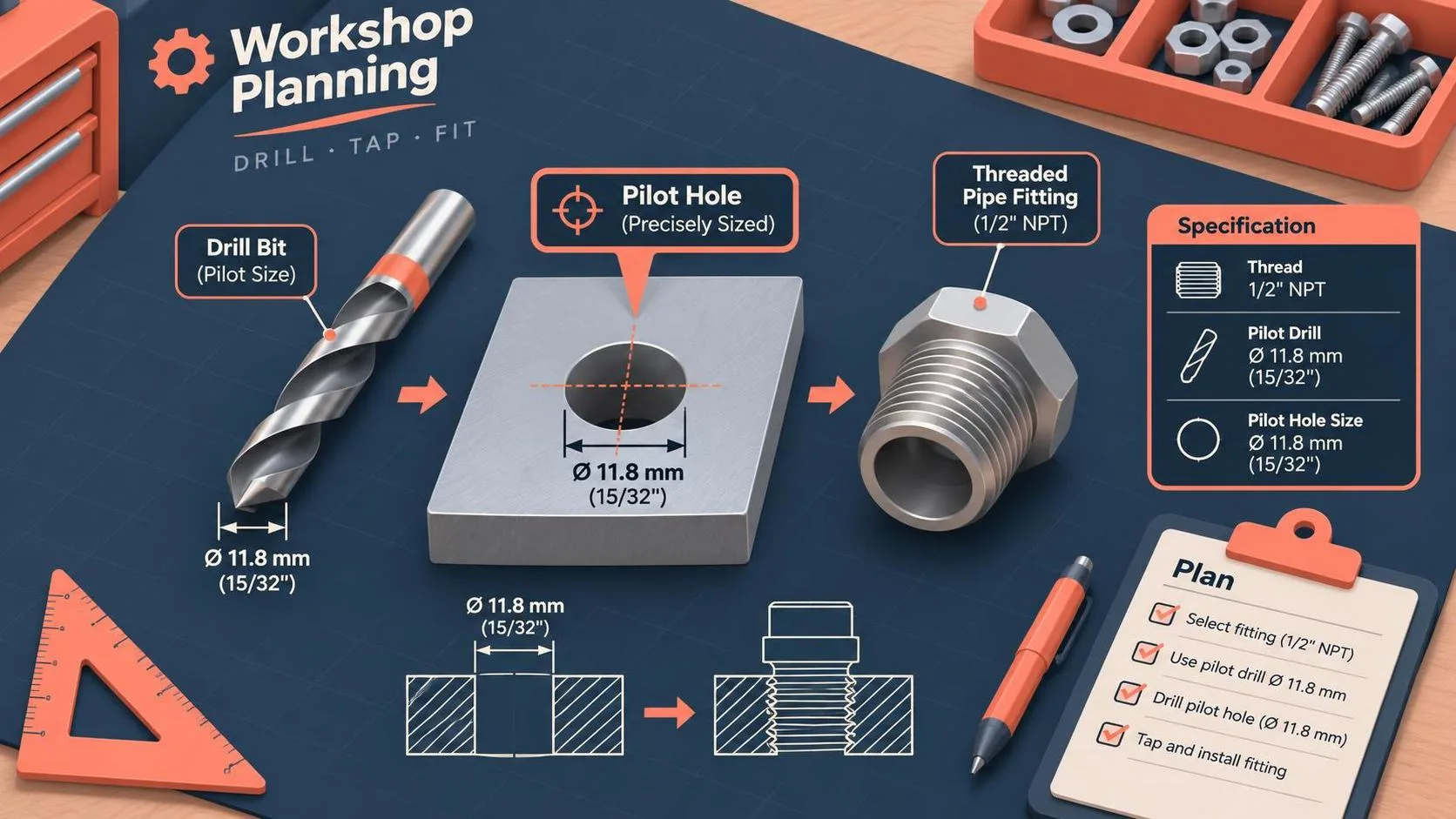
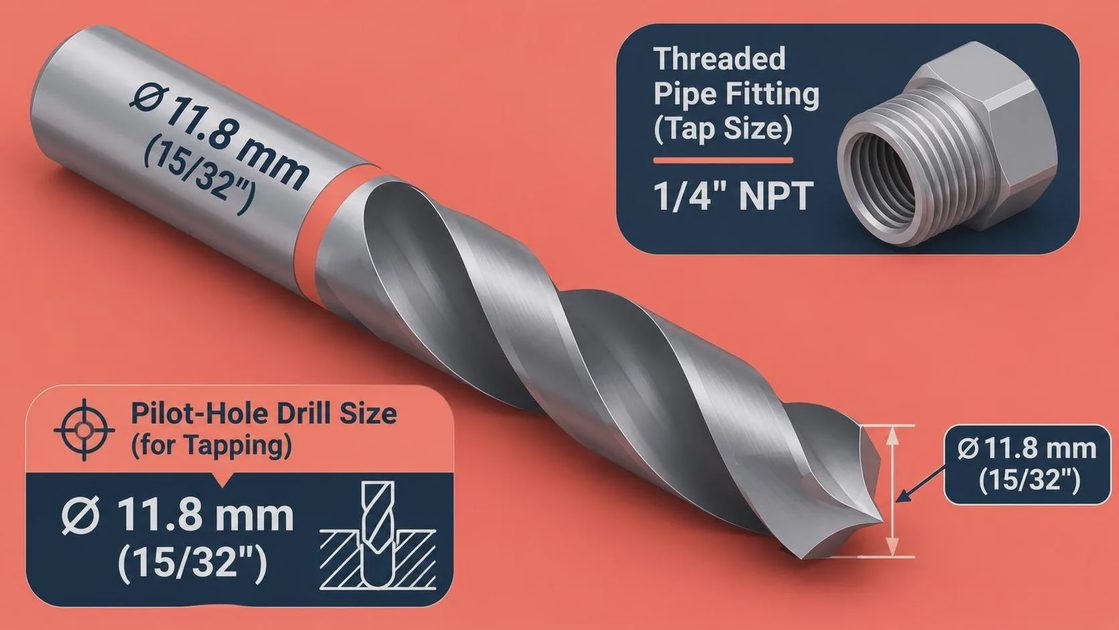
The standard 1/8 inch npt drill size is an R drill bit, measuring 0.339 inch in diameter. Drill that hole first, then use a 1/8-27 NPT tap to cut the tapered pipe threads. If you don't have a letter-size bit, an 11/32-inch bit is a common substitute at 0.34375 inch, but it makes a slightly larger hole. For the best fit, use the drill size specified by your tap manufacturer and check the finished threads with the fitting you're installing.
Don't let the fraction fool you: a 1/8-inch NPT fitting does not need a 1/8-inch hole. That number is a nominal pipe size, not the diameter you measure across the outside of the threads. A 1/8-27 NPT thread has 27 threads per inch and a tapered profile. The taper is what lets the male and female threads wedge together as the fitting tightens.
Choosing the 1/8 inch npt drill size
An R bit is the straightforward choice for a typical 1/8-27 NPT tap. Its 0.339-inch diameter is about 0.005 inch smaller than an 11/32-inch bit. That doesn't sound like much, but it changes how much material the tap has available to form the threads.
The 11/32-inch substitute can work, especially when that's the bit already in the drawer. The trade-off is a little less thread engagement, and there's less room to correct a loose fit if the tap goes too deep. For a pressure-bearing connection, I would rather get the R bit than gamble on a hole that starts oversized.
An NPT tap is not interchangeable with an NPTF tap, a straight pipe tap, or a bolt tap just because the fitting looks close. Match the tap to the fitting and the job. If the fitting or component calls for a different thread standard, stop and identify it before drilling.
Drill the hole square and leave enough depth
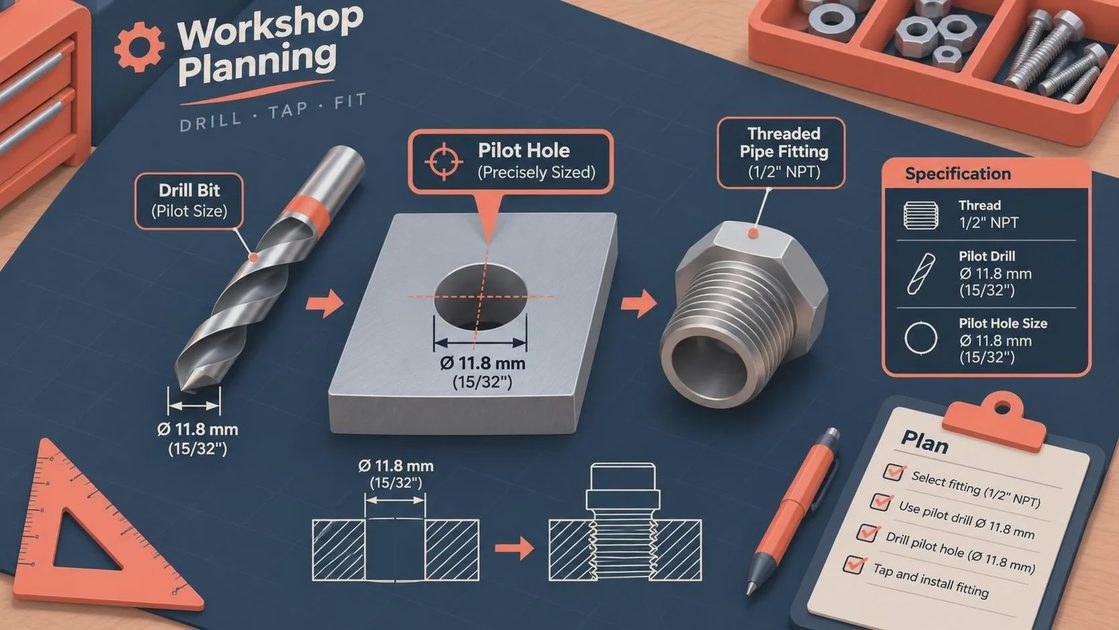
Secure the workpiece in a vise or with clamps. Mark the center, use a center punch where appropriate, and drill as square to the surface as you can. A drill press makes alignment easier, but a hand drill can do the job if the work is accessible and you take your time. Don't hold a small part in your hand while drilling it.
For a blind hole, depth takes planning. The tap needs room beyond the finished threads for its tapered cutting end and chips. The fitting also needs room without bottoming out. There isn't one safe drill depth for every part: it depends on the tap, the fitting, and the thickness of the material. Check those dimensions before you start, and don't drill through a wall that needs to hold pressure.
Use a cutting fluid suited to the material when drilling and tapping metal. Clear chips as you go, keep the bit from wandering, and lightly deburr the entrance. A large countersink is not a substitute for a proper hole; removing too much material at the opening sacrifices useful thread length.
Tap gradually and check the fit
Start the tap square to the hole with a tap wrench. A crooked start can leave you with a fitting that points the wrong way or doesn't seal evenly. Turn steadily without forcing it, and back the tap up periodically to break chips. Withdraw it as needed to clear debris, particularly in a blind hole. If the tap binds hard, stop and find out why instead of leaning on the wrench. A broken tap is a miserable thing to remove.
The big mistake with tapered pipe threads is cutting too deep. The farther the tap goes in, the larger the threaded opening becomes at the surface. That lets the male fitting screw farther in and can leave a loose connection. You can remove more material, but you can't put it back.
Start shallow, clean out the chips, and check the fitting. A proper NPT thread plug gauge is the better way to verify the internal thread when the connection matters; follow the gauge and tap makers' instructions. A test fitting can help you judge progress, but it isn't a substitute for a gauge because fittings vary. Don't chase a particular number of exposed threads as a universal rule.
Seal and test the connection
NPT threads usually need a suitable thread sealant to help prevent leaks. Choose a tape or pipe-thread compound rated for the fluid, pressure, temperature, and application. Follow its instructions, and keep loose tape and excess compound out of the passage. A pneumatic fitting in a garage air line and a fitting carrying fuel don't necessarily call for the same sealant.
Tighten the fitting to the component or fitting manufacturer's instructions. Don't use a long wrench to force a few more turns just because some threads remain visible. Overtightening can crack a thin casting or damage the threads, especially in softer materials.
Before putting the assembly into service, clear all chips and test it using a method appropriate to the system. For a compressed-air connection, a leak-detection solution on the assembled joint can reveal escaping air. Depressurize the system before making corrections. Never assume a fitting is sound just because it feels tight.
When the hole is already too large
If the tap drops in too far or the fitting won't tighten properly, more sealant is not a dependable repair. Inspect the threads for damage and confirm the fitting is actually NPT. A mismatched straight thread or another pipe standard may seem to start correctly and still fail to seal.
Depending on the part and its service, the repair may involve replacing the component or having a qualified shop assess a suitable threaded insert or repair fitting. Don't drill and tap to a larger size without checking wall thickness, clearances, and pressure requirements. On a tank, pressure vessel, fuel component, or other safety-critical part, replacement or professional repair is the sensible move.
For an ordinary shop project, the order is simple: verify the thread, drill with an R bit, tap a little at a time, and check before cutting deeper. Back to the bench.