I remember the first time I tried to save money on garage wall systems. I bought a $30 pegboard, nailed it straight onto the studs, and loaded it with every screwdriver I owned. A month later, the hooks were dropping tools on my workbench. I've screwed this up so you don't have to.
Garage wall systems are the upgrade I recommend before almost any other garage project. A good system gets your bikes, hoses, extension cords, and hand tools off the floor and onto a wall where you can actually see them. But not all garage wall systems are created equal. After installing them in more than 40 garages, I can tell you the difference between a system that lasts and one that's just decoration.
Why Most Garage Wall Systems Miss the Mark
The biggest mistake I see is ignoring how much weight goes on the wall. A typical slatwall hook rated for 50 pounds is fine for a push broom. It is not fine for a 100-pound garage door opener motor you're trying to store. I've opened up garages where the sheetrock behind a steel wall panel was crushed because the previous owner mounted the panel with drywall anchors rated for 25 pounds and then hung a snowblower attachment from it.
Another common problem: people skip the furring strips. If you mount a panel directly on a framed wall with no air gap, moisture builds up behind it, and in an attached garage that goes through Ohio summers, you end up with mold. A simple 1x2 furring strip makes a huge difference.
Finally, don't use cheap accessories. The panel is only half the system. Spend the extra dollar on hooks and bins that lock in place.
Pegboard vs. Slatwall: The Two Main Options
If you're on a budget, pegboard is the classic. A 4x8 sheet of 1/4-inch pegboard runs about $20 at any home center. But standard pegboard hooks pull out easily, and the board flexes if you put heavy stuff on it. Half-inch tempered pegboard is better but harder to find.
Slatwall handles heavier loads and looks cleaner. You'll see it in every garage store because it works. I've used ProSlat panels in my own shop and in several client garages. The 4x8 slatwall panel runs around $80 to $90, and the accessories lock in solidly. Gladiator and Wall Control make steel versions that are even stronger, but they'll set you back $150 to $300 per panel.
For most homeowners, slatwall is the sweet spot.
What a Good Garage Wall System Should Cost
A full wall system for a typical two-car garage can cost anywhere from $300 to $2,000 depending on how much wall you cover and what materials you pick. On the cheap end, you can cover a 20-foot wall with pegboard and furring strips for under $150 in materials. On the high end, a powder-coated steel system from Wall Control will run you closer to $1,200 for that same wall.
In my experience, a quality slatwall setup with enough hooks and bins to handle a working garage lands somewhere around $600 to $800. That includes the panels, the furring strips, the fasteners, and a couple dozen accessories. If you hire someone to install it, add another $200 to $400 in labor. I've done it myself in an afternoon, so save the labor cost and buy better accessories.
How I'd Install a Garage Wall System in Your Garage
Installation is straightforward, but you have to do it right. Start by finding your studs and marking them on the floor. Use a level to draw a horizontal line where the top of your panels will sit. That line matters because most garage floors are not perfectly level.
Cut a pressure-treated 2x4 to use as a bottom ledger, screw it into the studs, and set your first panel on top of it. That keeps the panel edges from hitting an uneven floor. Then secure the panel to the studs with 1-1/4 inch sheet metal screws or the fasteners that came with the system. I always add a 1x2 furring strip around the perimeter of the wall before mounting the panels. It creates an air gap and gives the screws something to bite into.
The whole process usually takes two hours for a single wall. You'll need a drill, a level, a stud finder, and a second set of hands for the last panel.
My Pick for Most Garages
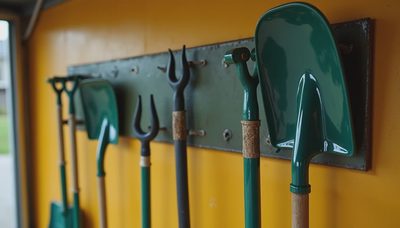
If you own a suburban attached garage and want maximum flexibility without spending a fortune, I'd hang ProSlat slatwall. I've had mine up for three winters now, and it hasn't sagged or pulled loose. The aluminum accessories are easy to move, and they hold everything from shovels to a folding ladder.
If your garage is more workshop than parking space, look at Wall Control steel panels. They're spendy, but they'll handle hammers, chisels, and heavy power tools without issue. Steel panels also do better in damp climates because they don't absorb moisture like MDF slatwall can.
Skip anything that claims to be adhesive-backed or peel-and-stick. I pulled a few of those off a client's wall after a year, and they took the paint off with them. A proper garage wall system has to be screwed into the structure.
The Bottom Line on Garage Wall Systems
Before you spend money on epoxy flooring or new cabinets, get your walls sorted. A good wall system changes the way you use the garage more than almost any other upgrade. For around $600 to $800 you can turn a cluttered wall into usable space. I've installed garage wall systems in over 40 garages, and I've never had a client wish they'd spent less.
Pick a system that matches the weight you actually hang, install it with furring strips and real fasteners, and you won't have to do the job again. That's the whole trick. Back to the bench.