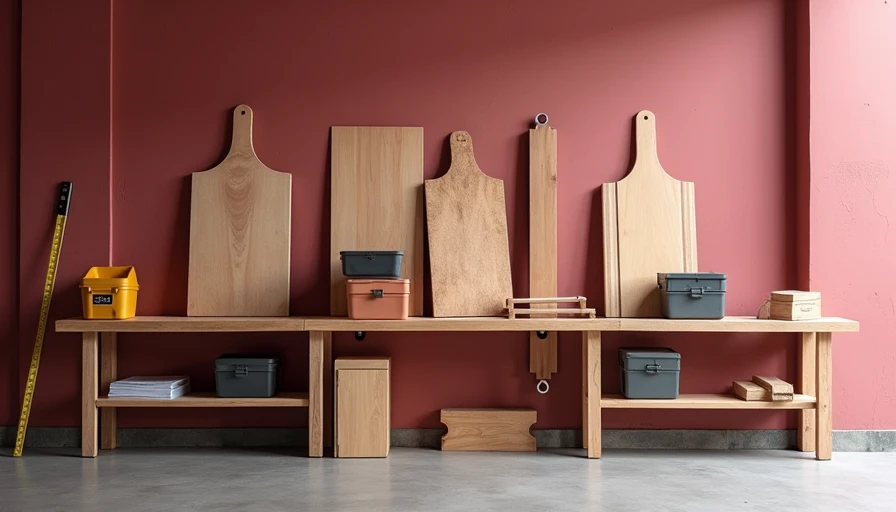
When homeowners ask me for workbench top ideas, they usually start with appearance. They want a clean wood surface, maybe a vise at one end and enough room for weekend projects. I start somewhere else: what will you actually do on it? A top for woodworking needs a different surface than a bench used for oily mower repairs, welding, or assembling cabinets. I have built and rebuilt enough garage benches to know that the wrong top becomes an expensive pile of scraps within a year.
The best choice balances flatness, stiffness, repairability, and price. It also needs to fit the garage around it. Leave enough room to walk behind the bench, open drawers, and handle an eight-foot board without hitting the overhead door tracks. Before buying material, measure the wall, locate outlets, and decide whether the bench will be freestanding or lagged into studs.
Start with the work, not the material
For general garage work, I like a top between 24 and 30 inches deep and 34 to 38 inches high. A 36-inch height works well for assembly and repairs, while a 40-inch surface is comfortable for detailed hand-tool work if you are tall. The frame matters just as much as the top. Four-by-four legs or doubled two-by-four supports with a front stretcher keep the bench from shaking when you are chiseling or tightening a stubborn fastener.
One of the most useful workbench top ideas is to make the surface replaceable. Instead of gluing the top permanently to the frame, use lag screws through oversized holes or bolts from below. When the surface gets cut, stained, or swollen from a winter leak, you can remove it without demolishing the entire bench. I learned that after ruining a fixed top while rebuilding a snowblower. I've screwed this up so you don't have to.
Plywood is the practical garage winner
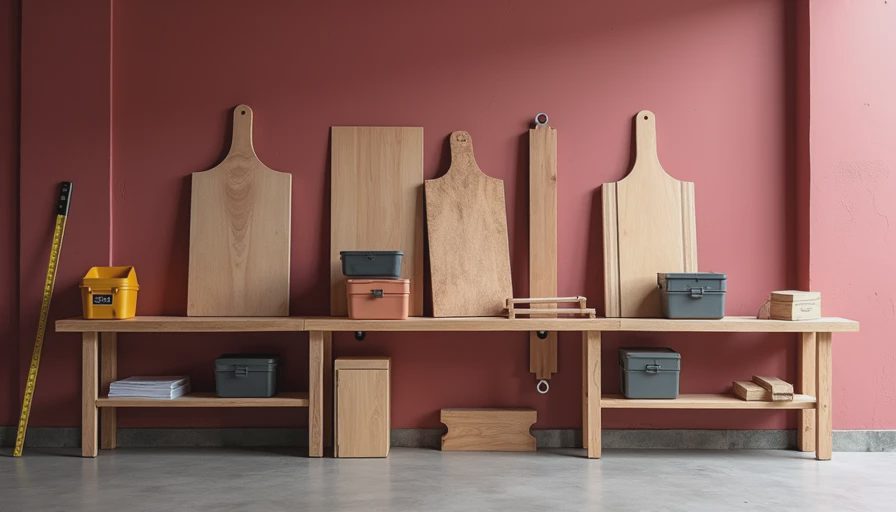
Two layers of 3/4-inch plywood make one of the strongest affordable tops for a home garage. Construction-grade plywood works for a rough utility bench, but cabinet-grade birch plywood gives you a flatter, cleaner surface. Spread wood glue between the layers, fasten them with 1 1/4-inch screws from underneath, and trim the edges with a router or circular saw. A 4-by-8 sheet commonly costs roughly $60 to $120 depending on grade and local supply.
Seal all six sides, especially the edges. I prefer two or three coats of polyurethane for a general bench, with a light sanding between coats. For a repair bench, a coat of durable floor paint can make oil easier to wipe away, but do not expect paint to survive heavy hammering forever. Add a replaceable hardboard skin if you frequently work with adhesives, paint, or automotive fluids. It costs little and can be swapped in an afternoon.
Plywood also makes it easy to install a woodworking vise. Add a hardwood or plywood block under the vise location so the mounting bolts do not crush the top. Keep the vise close to a front corner, but not so close that the jaws hang beyond the support leg. That small layout decision prevents a surprising amount of flex.
Butcher block and hardwood tops
Butcher block is the classic answer when you want a heavy, attractive bench that feels solid under a hand plane. A 1 1/2- to 2-inch maple or beech top can weigh well over 100 pounds, so the base must be built like furniture rather than a light shelving unit. A quality top may cost $250 to $600, but it can last decades if you maintain it.
These are among the better workbench top ideas for woodworking because the surface absorbs vibration and can be flattened after years of use. Do not seal a woodworking top with a thick glossy film if you plan to use hand tools. Paste wax or a penetrating oil finish is easier to renew and less frustrating when glue drips on the surface. For mixed garage use, polyurethane provides more stain resistance, though it can become slick.
Hardwood moves with humidity. Fasten it from below through slotted holes so the top can expand and contract across its width. Do not trap it between rigid steel brackets. In an attached garage, seasonal movement is normal, particularly in humid summers and cold Ohio winters.
Steel, laminate, and specialty surfaces
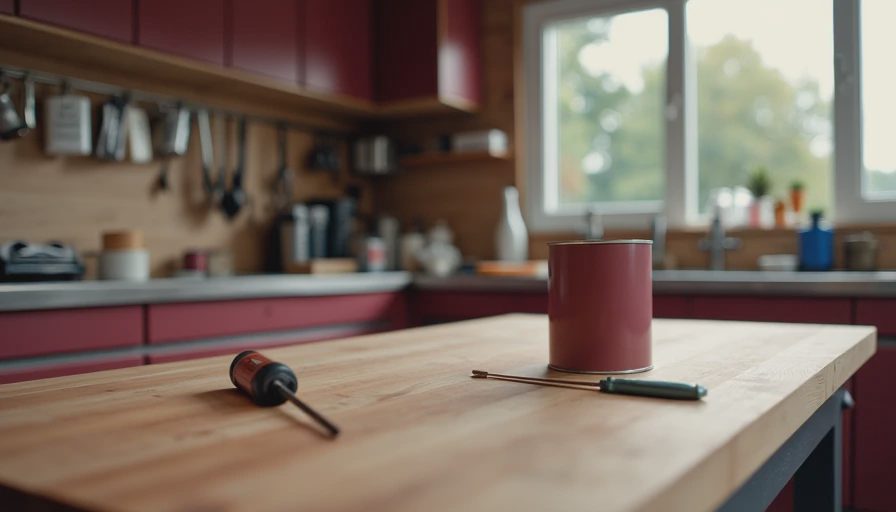
A steel-topped bench is excellent for small engine repair, welding preparation, and messy mechanical work. A 14-gauge steel sheet over plywood gives you a durable working surface without requiring a solid steel fabrication table. Round the corners, grind sharp edges smooth, and bond the sheet with construction adhesive or screw it to the frame from underneath. Never weld on a galvanized sheet because heating the coating creates hazardous fumes.
High-pressure laminate is another sensible option for a clean assembly bench. It is flat, easy to sweep, and available in many colors, but it is not a hammering surface. A laminate top over 3/4-inch plywood usually works better than laminate alone. Keep hot soldering irons, grinding sparks, and aggressive solvents away from it. These workbench top ideas make sense when the bench is used for electronics, model building, household repairs, or light assembly rather than heavy impact.
Rubber mats can improve almost any surface. A 1/2-inch utility mat protects dropped parts and reduces noise, while a removable cutting mat protects the top from utility knives. Avoid permanently gluing a soft mat down in a damp garage; moisture can stay underneath and stain the plywood.
Details that make the bench useful
A top is only half the job. Put two or three outlets above the bench, ideally on a properly protected circuit installed according to local electrical requirements. Keep cords from crossing the walking path. Bright LED shop lights mounted over the front half of the bench prevent your body from casting a shadow across the work.
For storage, shallow drawers are better than one giant cabinet drawer. A 3-inch drawer holds drill bits, pencils, and measuring tools without becoming a junk pit. Put heavier power tools in lower drawers or cabinets so the bench remains stable. If you install a pegboard, leave at least 1 inch behind it for hooks and use a French cleat or solid mounting strip instead of relying on thin wall material.
One of my favorite workbench top ideas is a removable sacrificial panel beneath the area where I cut or drill. Mine is a 1/2-inch MDF sheet held by a few countersunk screws. It is cheap, flat, and easy to replace. That panel has saved the nicer plywood underneath more than once.
A simple build plan and budget
For a dependable 8-foot bench, budget about $250 to $450 for a plywood top, two-by-four frame, lower shelf, fasteners, finish, and basic storage. Hardwood can push the total beyond $700, while a steel-faced utility bench often lands around $350 to $600. Prices depend heavily on lumber quality and whether you already own a saw, drill, clamps, and router.
Build the frame first and check it for square before cutting the top. Shim the feet if the garage floor slopes toward the overhead door, then anchor the bench to wall studs if children, vehicles, or heavy drawers could shift it. Install the top with accessible fasteners, seal the exposed edges, and let finishes cure fully before loading the surface. Polyurethane often needs several days before it handles hard shop use comfortably.
Among all the workbench top ideas I have tried, the replaceable plywood design remains the one I recommend most often. It is stiff, affordable, easy to modify, and not precious. Add a vise, good lighting, and storage that matches your tools, and the bench becomes the part of the garage you use every week instead of another project waiting for attention. Back to the bench.