A garage door is the largest moving part of most houses, yet homeowners often choose one from a showroom sample and live with the decision for 20 years. I have framed, replaced, insulated, and adjusted more garage doors than I can count, and I have made expensive mistakes on my own house. If you are turning a dark garage into a workshop, gym, or useful storage room, the door deserves attention before you spend money on cabinets or flooring.
The right garage door should be quiet, reasonably insulated, secure, and sized for how you use the room. It should also work with your existing tracks, opener, ceiling height, and weather conditions. A beautiful door that rattles every morning or lets winter air pour around the edges is not an upgrade. It is an expensive decoration.
Start with the door material and construction
Most residential garage doors are made from steel, aluminum, wood, or a combination of materials. For an attached garage, I usually steer homeowners toward an insulated steel garage door with a 2-inch polyurethane or polystyrene core. Steel handles bumps from bicycles, lawn equipment, and the occasional careless backing maneuver better than a thin wood panel. It also needs less maintenance than a stained wood door.
A single-layer steel door is the budget option, often costing roughly $700 to $1,400 installed depending on size, hardware, and local labor. It is fine for a detached storage building, but it transmits noise and temperature changes directly into the garage. A two-layer insulated garage door commonly lands around $1,200 to $2,500 installed. A premium three-layer model can run from $1,800 to more than $4,000, especially with windows, decorative hardware, custom colors, or a double-wide opening.
I painted my own uninsulated door years ago because I thought appearance was the main problem. It looked better for about six months. Then the panels shook in the wind, the garage got brutally hot in July, and the opener sounded like it was dragging a toolbox across concrete. I replaced it with an insulated steel model. That was money better spent than the paint.
Measure before you call a dealer
Measure the finished opening, not just the old door panel. Record the width, height, side room, headroom above the opening, and the distance from the ceiling to the nearest light fixture or storage rack. A standard single opening is often 8 or 9 feet wide, while a double opening is commonly 16 feet, but older houses are full of exceptions.
Check whether the existing tracks are bent, rusty, or improperly mounted. A new garage door installed on tired tracks can develop alignment problems quickly. Look at the vertical supports too. The brackets should be fastened to framing, not merely drywall or thin sheathing. If the installer discovers weak framing, allow a few hundred dollars for reinforcement rather than arguing over the invoice after the door is sitting in your driveway.
Headroom matters when you have a low ceiling. Standard lift hardware may require about 12 inches of space above the opening, although low-headroom and wall-mounted systems can solve tighter layouts. Do not order a garage door until these measurements are confirmed on site.
Insulation, windows, and weather sealing
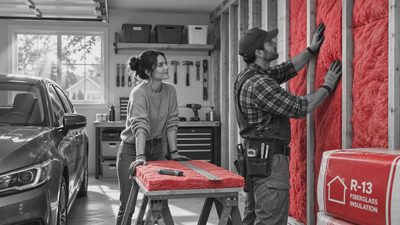
Insulation is not just about keeping the garage warm. It reduces panel flex, cuts street noise, and makes the room more comfortable when you are working on a project in January. In central Ohio, I notice the difference immediately when an insulated garage door is paired with sealed walls and a decent ceiling. In a hot climate, the same approach slows heat gain during the afternoon.
Ask for the door's actual insulation rating rather than accepting the word premium. The R-value is useful, but construction quality matters too. A door with a high advertised number can still leak air around the edges if the bottom seal is flattened or the side stops are crooked. Replace worn perimeter seals before blaming the panels.
Windows bring daylight into a dark garage, but they also add cost and can reduce privacy. Frosted or textured glass is a practical compromise. If your garage faces the afternoon sun, clear windows can turn the space into a greenhouse. I prefer a small upper row of insulated glass rather than a full panel of windows. It gives you useful light without making the garage feel exposed.
Choose an opener that matches the room
The garage door opener should be selected after the door weight and lift system are understood. A modern belt-drive opener is usually quieter than a chain-drive unit, which matters when a bedroom or office sits above the garage. Chain drives remain reliable and are often less expensive, but vibration travels through ceiling framing if the installation is sloppy.
A typical opener installation costs about $300 to $700, including the unit and labor. Chamberlain and LiftMaster products are common choices, with LiftMaster often positioned as a professional-grade line. Genie also offers widely available residential systems. I pay more attention to rail alignment, mounting, travel limits, and safety reversal than to a long list of app features.
Smartphone control is convenient when you need to confirm whether the garage door is closed, but it is not a substitute for a properly adjusted safety system. Test the photo eyes and reversal function after installation. Place a solid object such as a scrap of lumber under the closing path and verify that the door reverses without crushing it. Never disable the safety sensors because the door is nuisance-reversing; find the alignment problem.

What a proper installation should include
A dependable garage door installation includes more than hanging panels and plugging in an opener. The crew should inspect the opening, fasten tracks securely, balance the door, adjust travel, test safety sensors, and explain emergency release operation. The door should lift smoothly by hand when disconnected from the opener. If it drops heavily or shoots upward, the spring balance needs attention.
Torsion springs are under serious tension. I have worked around them for decades, and I still do not recommend replacing one as a casual weekend project. A spring repair commonly costs $150 to $400, depending on the system and location. Replacing both springs at once can make sense when one fails on an older paired setup, because the second spring has experienced the same cycles.
Get the warranty in writing. Separate coverage may apply to panels, hardware, springs, and the opener motor. Ask who handles service if the installing company stops answering calls. A low bid that excludes haul-away, trim repair, or opener programming can become the expensive bid by the end of the job.
A practical buying plan
Start by deciding whether the garage is mainly for parking, conditioned workspace, or mixed use. For parking only, a durable steel garage door and dependable opener are usually enough. For a workshop, choose insulation, perimeter seals, lighting-friendly windows, and a quiet belt drive. If you will heat or cool the room, seal the door opening before buying a larger HVAC system. There is no point paying to condition a room with a two-inch gap under the panels.
Set aside roughly $1,500 to $3,000 for a straightforward single-car upgrade and $2,500 to $5,000 for a more involved double-car project with an insulated door, new opener, trim work, and disposal. Prices move with region and design, but these ranges are useful for spotting an unrealistic quote.
Finally, inspect the garage door twice a year. Lubricate hinges and rollers with a product intended for garage door hardware, keep the tracks clean, and test the balance and safety reversal. Do not grease the tracks; rollers should travel along clean tracks rather than slide through a sticky coating. Small maintenance takes minutes and can reveal a failing cable, loose bracket, or worn roller before it becomes a Saturday-night emergency.
I have screwed this up so you do not have to: buy the door for the way you use the garage, not for the sample color in the catalog. Measure carefully, spend on insulation and installation quality, and treat the opener as part of the system. That approach will leave you with a quieter, safer room that earns its square footage. Back to the bench.