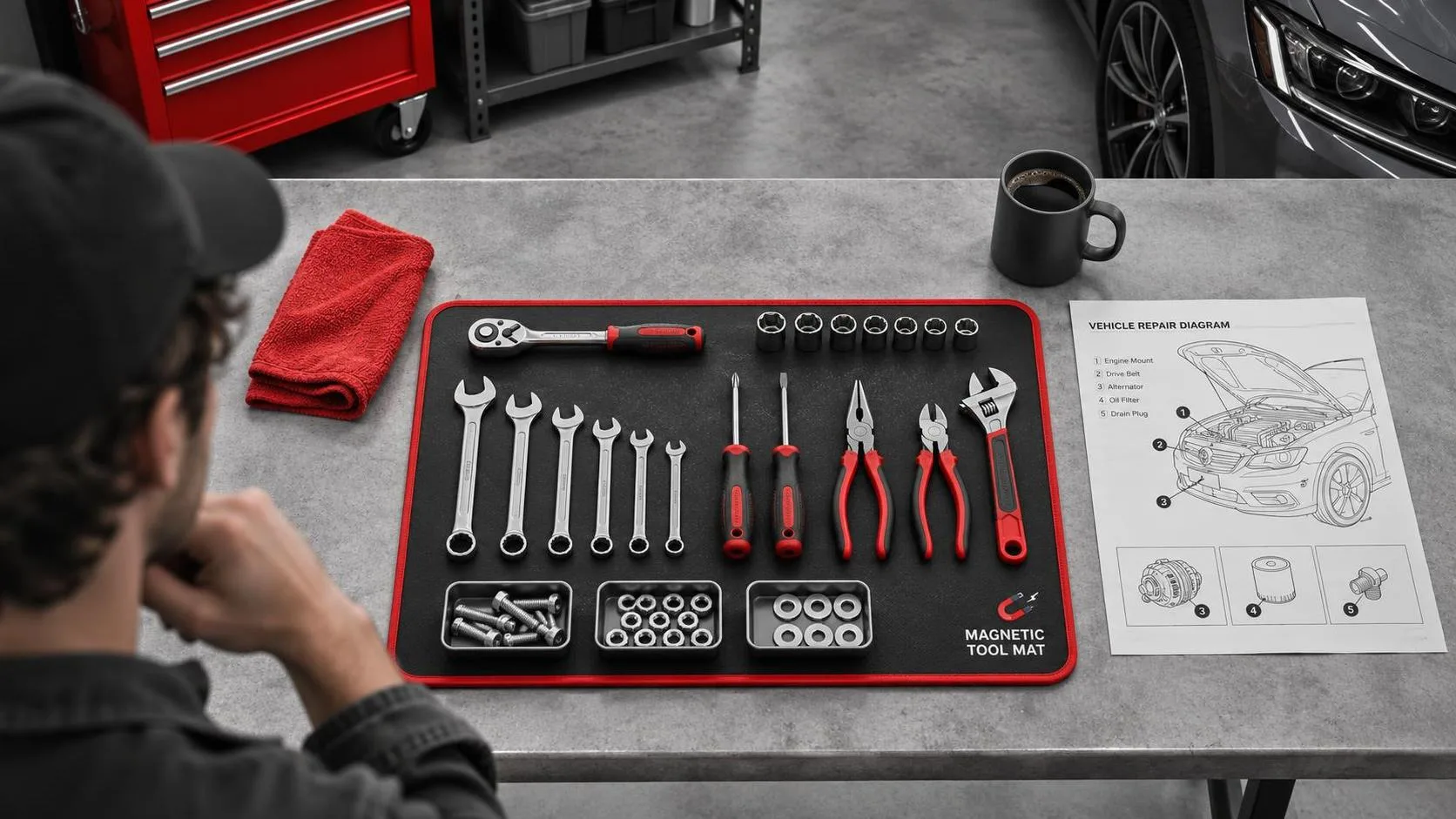
An icon magnetic tool mat sounds like a handy way to keep sockets and loose hardware from wandering across the bench. The catch: I can’t confirm a specific ICON mat’s current listing or specifications, so check Harbor Freight’s product page or store packaging before buying. For alternatives, a PITTSBURGH magnetic parts tray suits small steel fasteners, a Lisle magnetic parts tray is useful when you want a contained dish, and an Ernst socket organizer makes sense if keeping sockets in order matters more than grabbing loose bolts. Those are different solutions, not interchangeable versions of the same tool.
What a magnetic mat should do on the bench
The appeal of an icon magnetic tool mat is straightforward: set down a wrench or a handful of bolts and keep them close to the job. That can be useful when you’re working on a mower deck, taking apart a drill press, or pulling hardware from a cabinet hinge. A flat surface also gives you room to lay out parts in the order they came off.
Before assuming how the mat works, though, look at the listing. A product described as magnetic might attract tools on its top surface, attach to a steel surface underneath, or do both. Those are not the same feature. A mat that sticks to a toolbox side won’t necessarily hold every tool placed against its outer face.
Check the dimensions against the space where you’ll use it. A broad work surface can be useful beside a vise, but it may crowd out the actual repair. Measure the clear area on your bench or cart with the drawers open, not just the total benchtop. If you expect to move the mat around, check its thickness and whether it rolls or folds for storage.
Steel sticks; plenty of shop hardware doesn’t
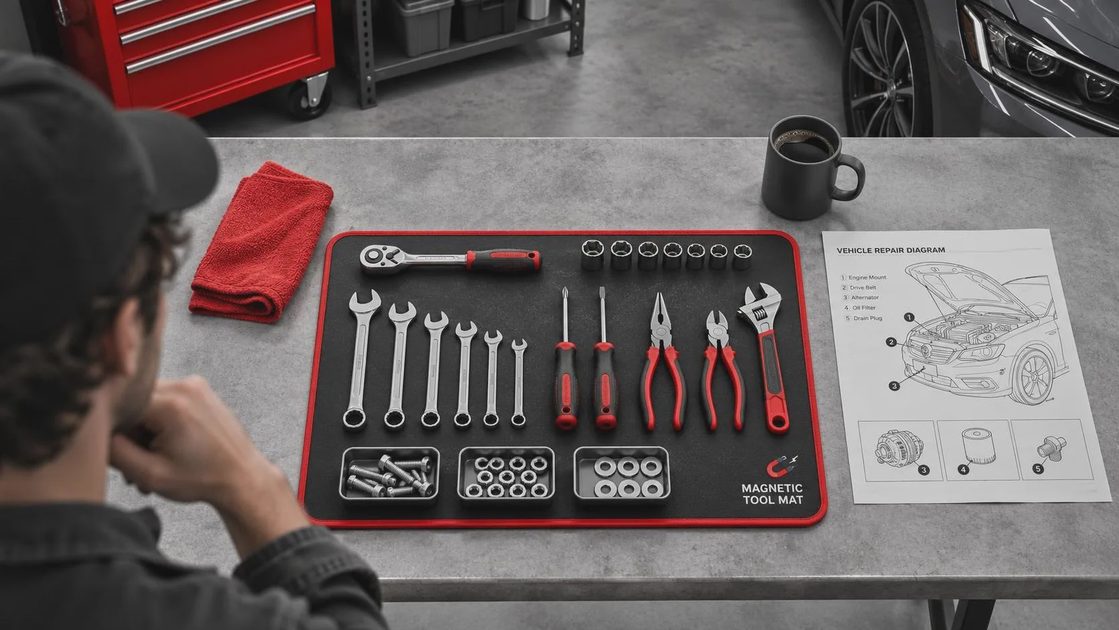
A magnet is good at collecting many steel screws, nuts, washers, and hand tools. It will not reliably hold aluminum, brass, or most plastic parts. Stainless steel is a mixed bag: some grades are attracted to magnets and others aren’t. Test the actual fastener rather than trusting its color or label.
That matters during a repair. If the steel bolts stay put but the brass fittings and plastic clips slide away, you still need a separate container. A shallow tray with divided sections can be more useful than a magnetic surface when you’re sorting several kinds of hardware.
I’d also be careful about treating magnetic attraction as a weight rating. A socket may sit happily on a horizontal mat and fall off when that same mat is mounted vertically. Contact area, tool weight, surface condition, and the strength of the magnets all matter. Don’t put a loaded mat above a vehicle, a person, or anything you don’t want dented unless the manufacturer explicitly supports that use and you’ve followed its instructions.
Mat, parts tray, or socket rail?
The icon magnetic tool mat idea makes the most sense when you want a temporary staging area, not permanent storage. Think of it as a place for the tools and fasteners involved in one job. Whether a particular ICON product fills that role depends on the design and magnetic arrangement shown on its packaging.
A magnetic parts tray is a better fit for a pile of screws because its sides provide a physical barrier. PITTSBURGH and Lisle both offer magnetic tray options; compare their shapes and dimensions with the space on your cart. A tray can still collect metal shavings, and its magnet doesn’t turn nonmagnetic fasteners into steel.
For sockets that live together between jobs, consider an Ernst socket organizer or a rail that matches your drive sizes. An organizer gives each socket a place, making missing sizes easier to spot. It won’t necessarily secure loose bolts, and you should check whether a particular organizer is magnetic before counting on it to attach to a steel surface.

Check the contact surface before sticking anything down
If an icon magnetic tool mat attaches to a steel toolbox or cart, make sure the mounting surface is clean and flat. Grit trapped between a magnetic base and painted metal can scratch the finish when the mat shifts. Lift the mat to reposition it rather than dragging it across the paint, and wipe both surfaces before putting it back.
Don’t assume a magnet will grip every part of a vehicle or cabinet. Aluminum body panels won’t give it the steel surface it needs, and curved or uneven steel reduces contact. Painted surfaces can also be damaged by grit or by a hard-backed accessory. For a fender, a purpose-made protective cover is a safer starting point than an unknown magnetic mat.
Keep magnetic accessories away from sensitive electronics and magnetic storage, and follow any warnings that come with the product. They also have no business near welding or grinding unless the maker says otherwise: hot sparks, abrasive dust, and metal filings can foul or damage a work surface. Use a suitable welding blanket or other protection for hot work instead.
What to check on the listing
Before paying for an icon magnetic tool mat, look for the actual dimensions, the material covering the magnets, cleaning instructions, and any stated load or mounting limits. Product photos should show whether it is intended to lie flat, attach to a vertical surface, or both. If the description leaves that unclear, ask the store rather than guessing from the word magnetic.
Consider cleanup, too. Fine steel filings can cling stubbornly around magnets, and a textured surface may be harder to wipe clean than a smooth one. Check the care instructions before using solvents or brake cleaner; a product that handles ordinary shop grime may not tolerate every chemical on your shelf.
My practical take: buy for the job you actually do. If loose bolts disappear during small repairs, start by comparing a contained magnetic tray with the icon magnetic tool mat. If your sockets are scattered through a drawer, an organizer addresses that problem directly. Either way, measure the space first and check what the accessory is designed to hold. Back to the bench.