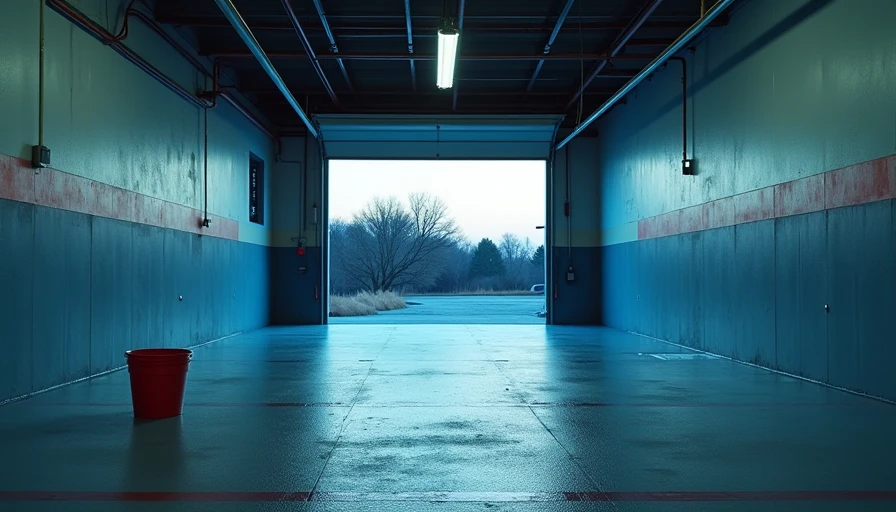
Last winter, I watched a client nearly go down on his own garage floor. The concrete was smooth, the heat from the cars had melted snow off the wheel wells, and that film of water turned a walk to the toolbox into ice skating. So I gave him the talk I give every homeowner: if you're coating your garage floor, make it a non slip epoxy floor. It's one upgrade that pays for itself in safety alone.
Why Traction Matters More Than Looks
I painted my own garage floor with glossy epoxy once, and it looked great for three weeks. Then the dog came in with wet paws, and I nearly went down twice. The problem isn't epoxy — it's the smooth topcoat everyone wants in photos. A slick coating is a liability the moment it gets wet, dusty, or covered in sawdust. Sawdust on gloss epoxy is like ball bearings on glass.
The fix: add texture to the wet coating. That's the whole idea behind a non slip epoxy floor. You're not giving up durability, just the mirror finish that looks good in a showroom and tries to kill you in a workshop.
This matters in a home gym too. I've had clients park a rowing machine and a squat rack on bare painted concrete, and they all tell me the same story — the first time they're standing on a sweaty floor, they're worrying about their footing. A textured surface solves that without looking like a commercial loading dock.
What Makes a Non Slip Epoxy Floor Different
Texture comes from additives — silica sand, aluminum oxide, or rubber granules — broadcast into the wet epoxy before it cures. Aluminum oxide is my pick for a working garage. It's hard enough for jack stands and rolling toolboxes, and the fine grit you can feel through your shoes won't tear up your knees. Silica sand is cheaper but wears smooth in high-traffic lines after a couple of years. Rubber granules grip best when wet but soften the surface and make oil and brake dust harder to clean.
Particle size matters. You want something between table salt and coffee grounds — enough bite to stop a boot on an incline, but not so coarse that it traps dirt or stops a shop creeper.
How Much Does a Non Slip Epoxy Floor Cost?
A two-car garage kit with aluminum oxide runs $150 to $300. Add $100 to $400 for patching cracked concrete. If you hire a pro, expect $1,500 to $3,500 for a textured two-car coating. On the high end, a full polyaspartic system with a non slip additive runs $4,000 to $6,000 — worth it if you drop heavy tools or spill chemicals.
For most people, a good epoxy kit with aluminum oxide chips is the sweet spot. It'll last five to ten years in a normal garage.
One thing to watch: the cheapest kits often skimp on the aggregate. You'll get a little bag that's barely enough for a corner of the garage. Buy extra aluminum oxide if the kit doesn't include enough — a pound costs about $10 to $15.
How to Install a Non Slip Epoxy Floor That Lasts
Prep is 90% of the job. If the concrete is smooth or oil-stained, grind or etch it. I've seen $200 kits fail in six months because someone rolled epoxy over a dusty floor. The coating just sits on top, and the first turn of the tires peels it off.
Rent a concrete grinder from a home center for about $80 a day, and use a diamond cup wheel. Vacuum the floor, then mop it. If you do that, the epoxy will bite into the concrete and hold for years.
Once the concrete is clean and dry, roll on the epoxy base, let it get tacky, then broadcast the non slip additive. Too little gives you a glassy finish; too much lets you sand wood. Do two passes with the additive, then a clear topcoat to trap the grit. Let it cure 24 hours before walking on it, and seven days before parking on it. The surface may dry faster, but the bottom layer is still reacting.

Mistakes I'd Skip
I've screwed this up so you don't have to. Never add the grit directly into the base coat before rolling — it clogs the roller and leaves an uneven mess. And don't skip texture just to match a color palette. I once did a red floor with no aggregate to keep the wife happy; six months later I was jacking up a truck and my feet slid out from under me. I tore it out and redid it properly.
The Bottom Line
A non slip epoxy floor isn't the most glamorous upgrade, but it's the one you'll appreciate every January when you're carrying a toolbox across a wet floor. The cost is modest compared to a hospital bill or a busted tool. You don't need a crew; just prep thoroughly, use enough texture, and let it cure. Feeling is believing — run your hand across an aggregate sample before you decide. Back to the bench.