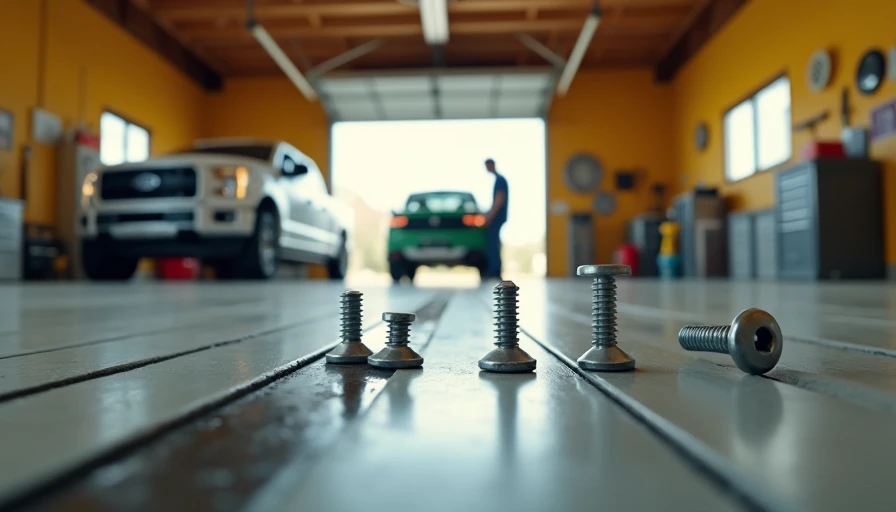
Garage door bolts are small parts, but they carry more responsibility than their price suggests. They hold hinges to door sections, attach vertical and horizontal tracks to framing, and keep brackets from shifting while a heavy door moves overhead. When one loosens, the door can rattle, bind, or sit out of square. I have found loose hardware in nearly every older garage I have worked on, including my own. The fix is usually straightforward, but only if you use the right fastener for the job.
Where garage door bolts are used
Most residential doors use several types of hardware. Track brackets commonly use bolts through slotted metal, allowing the installer to adjust the track position. Door hinges often use short bolts or self-tapping screws, depending on the manufacturer and door material. End bearing plates, spring brackets, and operator supports may use larger bolts, but those areas deserve more caution because they are connected to the door's lifting system.
A typical residential track bolt is a 3/8-inch diameter fastener, although 5/16-inch hardware appears on some lighter doors. Lengths often range from 1 to 1 1/2 inches, but the correct length depends on the bracket, track, and framing. Carriage bolts are common because their rounded heads sit cleanly on the track side, while the square shoulder prevents spinning as you tighten the nut.
Do not assume a shiny hardware-store bolt is an upgrade. Grade, diameter, thread pitch, washer size, and head clearance all matter. A bolt that is too long can interfere with rollers or the door's movement. A bolt that is too small can allow a bracket to shift under load.
How to identify the right replacement
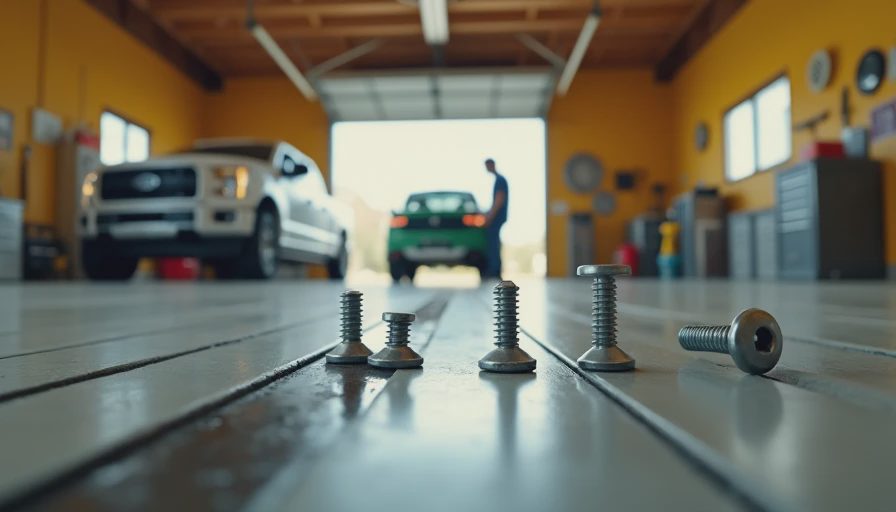
Before buying garage door bolts, take one old fastener with you or photograph the assembly with a tape measure beside it. Measure the diameter across the threaded portion, the length from beneath the head to the tip, and the width of the nut. Also note whether the original is a carriage bolt, hex-head bolt, flange bolt, or a specialized track fastener.
For an ordinary track bracket, zinc-plated steel is usually suitable in a dry attached garage. In a damp detached garage or coastal area, stainless steel resists corrosion better, but stainless is not automatically stronger than a quality carbon-steel bolt. Match the strength rating where it is marked. Grade 5 hardware is common for general structural fastening; avoid substituting an unmarked bargain bolt in a loaded bracket.
Use flat washers when the bracket slot is wide or the metal is thin. A washer spreads the clamping force and reduces the chance of the nut pulling through the slot. Nylon-insert locknuts are useful where vibration causes ordinary nuts to back off, but do not stack random lock washers, oversized washers, and spacers until the assembly no longer seats properly.
Replacing loose or damaged hardware safely
Start with the door fully closed. Disconnect the automatic opener from power and pull the emergency release only if you need to move the door by hand. Do not remove bolts from the bottom roller bracket, cable drum, torsion spring anchor, or spring-bearing hardware unless you know exactly how that system is loaded. Those components can release stored energy violently. For that work, call a qualified garage door technician.
For a simple track or hinge bolt, support the bracket with one hand and remove only one fastener at a time. This keeps the track from jumping out of position. Clean rust and packed dirt from the hole, then install the replacement with the head on the side specified by the bracket design. Start the nut by hand so you do not cross-thread it.
Tighten until the washer seats firmly and the bracket no longer moves, but do not crush thin track metal. If you have a torque wrench, follow the door or hardware manufacturer's specification. When no specification is available, firm hand-tool pressure is safer than leaning hard on a long breaker bar. Open and close the door manually several times before reconnecting the opener.
Common mistakes I see in garages
The first mistake is tightening everything without checking alignment. Garage door tracks need to remain parallel and spaced correctly from the door. Pulling a crooked bracket tight can make the problem permanent. The door may still operate, but rollers will scrape, the opener will work harder, and noise will return.
The second mistake is using drywall anchors or wood screws where a through-bolt should pass through a steel bracket. If the bracket attaches to solid wood framing, a properly sized lag screw can be appropriate. If the mounting surface is hollow or damaged, add solid blocking or use a suitable through-bolt arrangement rather than trusting a plastic anchor.
The third mistake is mixing hardware from different door systems. A bolt head that seems harmless can catch on a roller, and a nut placed on the track side can reduce clearance. Take a slow look at the door's travel path before tightening garage door bolts.
I once painted a garage floor before fixing a noisy track. Six months later, I tore part of it out to chase the vibration. The lesson was simple: repair moving hardware before spending money on finishes.
A better inspection routine
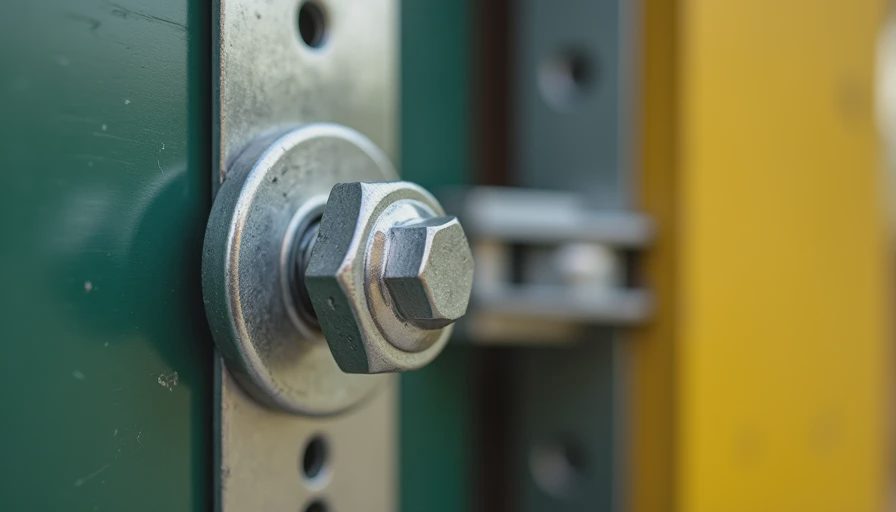
Twice a year, inspect every visible hinge, track bracket, roller stem, and opener mounting point. Look for shiny rub marks, elongated slots, rust trails, cracked metal, or nuts that can be turned by hand. Check the track spacing with a tape measure at the bottom, middle, and top. The measurements do not need to be identical on every door design, but sudden changes often point to a shifted bracket.
Run the door by hand with the opener disconnected. It should travel smoothly and remain near the position where you stop it. A door that drops, rises sharply, or binds is not simply a bolt problem; it can indicate spring imbalance, worn rollers, or a damaged cable. Do not try to correct that by tightening garage door bolts randomly.
Keep a small labeled container with spare washers, locknuts, and the exact replacement sizes used on your door. I also write the door brand and model on a card near the opener. That five-minute bit of recordkeeping saves a Saturday trip to three hardware aisles when a fastener disappears.
When to repair and when to call for help
Replacing a missing track bolt or hinge fastener is a reasonable homeowner project when the door is closed, the spring system is untouched, and the bracket remains accessible. A basic repair may cost less than $10 in hardware and take 20 to 45 minutes. A full track realignment or bracket replacement takes longer because the door must be kept square throughout the adjustment.
Call a technician if a cable is off its drum, a spring is broken, the bottom bracket is bent, or the door is too heavy to control by hand. A service visit commonly costs more than a bag of garage door bolts, but it is cheaper than a damaged vehicle, crushed fingers, or a door that falls from the track. Get the hardware issue fixed before adding insulation, storage cabinets, or a new opener.
The right fastener will not make a bad track design safe, but the wrong one can quietly create trouble. Match the original dimensions, preserve alignment, tighten with restraint, and inspect the whole system instead of chasing one noisy bolt. I have screwed this up so you don't have to. Back to the bench.