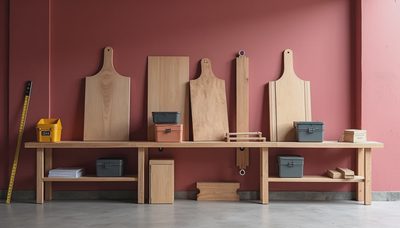
If you build workbench drawers into a garage bench the right way, the whole shop gets easier to use. The tape measure stops disappearing. Drill bits stop living in coffee mugs. Screwdrivers stop migrating to every flat surface in the room. I’ve spent enough time in attached garages to know that a clean bench is not about looking pretty; it’s about keeping the stuff you reach for every day within arm’s reach and out of the dust pile. The trick is making the storage fit the work, not the other way around.
Workbench drawers that fit the way a garage actually works
The first mistake I see is building one giant bench and then trying to stuff random storage under it. That gives you dead space, ugly gaps, and a drawer bank that fights the way your body moves around the bench. I like to think in zones. The shallow top zone holds layout tools, pencils, a small square, a utility knife, and the stuff that gets used on almost every project. The middle zone handles chargers, bits, drivers, and hand tools. A deeper lower zone can hold bulkier items like clamps, sanding supplies, or cordless tool cases.
For most homeowners, the bench itself should be 24 to 30 inches deep, with the drawer cabinet taking up only part of that depth if you still want knee room. That keeps the work surface useful instead of turning the whole thing into a wall of boxes. If you plan to sit at the bench, leave honest leg clearance. If you want standing room and maximum storage, build the drawers full depth and skip the stool. The whole point of workbench drawers is to make the bench work harder without making the room feel packed.
I also like to keep one long bank instead of several tiny cabinets. Fewer seams means less wobble, fewer dust traps, and a cleaner top. In a garage, simple usually wins.
Slide choice and drawer depth
This is where people save twenty bucks and regret it for ten years. Cheap slides feel fine in the store, then they sag when you load them with sockets, cordless batteries, or a box of screws. I stick with full-extension ball-bearing slides from brands like Accuride or Knape & Vogt when I want something dependable. For light storage, a 100-pound rating is usually plenty. For deeper drawers that hold chargers, power tools, or seasonal overflow, I like 150- to 200-pound slides. You do not need overkill on every drawer, but you do need a slide that matches the load.
Depth matters too. A 22-inch slide works well in a 24-inch-deep cabinet and gives you useful access without wasting space. If you go shallower than that, you start stacking things on top of each other, which defeats the point. If you go much deeper, the back of the drawer becomes a black hole unless you have a plan for it. I build drawer boxes from 1/2-inch plywood with a 1/4-inch bottom captured in a groove, because that keeps the box light without feeling flimsy. On a garage bench, I want the drawers to open smoothly even after a summer of humidity and a winter of dry heat.

What belongs in the top workbench drawers
The top workbench drawers should be boring in the best possible way. Mine usually hold pencils, markers, utility knives, small pry bars, a tape, a mini square, a combo square, ear plugs, and a few spare blades. If a tool gets used every week, it earns a spot close to hand level. If it gets used once a season, it can live lower or farther away. That simple filter keeps the shallow drawers from becoming junk drawers.
I also like to group by task. One drawer for layout tools. One for electrical odds and ends. One for fastener samples and anchors. One for sharpening and marking gear. When a drawer has a job, you stop digging. Foam trays help, but I am not precious about them. A few wooden dividers cut from scrap plywood work just fine and cost almost nothing. The key is keeping everything from sliding around when the drawer opens.
For chargers and batteries, I prefer a deeper drawer or an open shelf with ventilation. Milwaukee, DeWalt, and Ryobi chargers all throw a little heat, and burying them in a sealed box is asking for clutter. Give them room, and they stay useful instead of turning into a cord tangle.
The materials I trust for a hard-used bench
For the cabinet carcass, 3/4-inch plywood is the safe choice. Baltic birch is excellent if you can find it at a sane price, but a good cabinet-grade birch or maple ply usually does the job. I avoid MDF anywhere that might see moisture from a wet floor, an open garage door, or snow melt off boots. MDF builds fine furniture indoors. In a garage, I want something that can take a bump and still survive.
For the drawer fronts, a simple hardwood edge or solid plywood face is enough. You do not need fancy shaker profiles on a shop bench. A painted maple or birch face with a durable finish looks sharp and shrugs off grime better than soft wood. If you want the inside to stay brighter, paint the cabinet interior a light gray or white. It sounds small, but it makes hardware and fasteners easier to see when the garage light is not perfect.
A six-foot bench with a decent drawer bank can land anywhere from about $450 to $1,000 in materials, depending on plywood prices, slide quality, and whether you build the top from hardwood, laminated plywood, or a butcher block slab. That is real money, but it is cheaper than buying a flimsy setup twice.

The mistakes that make drawers a headache
The biggest mistake is making every drawer the same height. That gives you a row of tiny boxes that look organized and work badly. Build a few shallow drawers for hand tools and measuring gear, then include at least one deeper drawer for bulkier items. The second mistake is skipping dust control. A garage makes dust, saw chips, and road grit, so leave a little clearance, keep the slides clean, and do not obsess over a furniture-grade seal everywhere. This is shop storage, not a dining room sideboard.
I also see people overbuild the whole thing and forget the bench surface. If the top is too slick, tools skate around. If it is too thin, it flexes when you clamp something down. A 1 1/2-inch laminated top or a stout butcher block top solves that problem without making the cabinet feel top-heavy. For a truly useful setup, think in terms of daily reach. If you have to kneel, hunt, and shuffle every time you need a socket set, the layout is wrong.
If you are planning a garage remodel or a dedicated work zone, this is one of the smartest places to spend the budget. Good workbench drawers do not just store tools. They make the whole room feel calmer, faster, and easier to keep clean. I’ve screwed this up so you don’t have to. Back to the bench.